
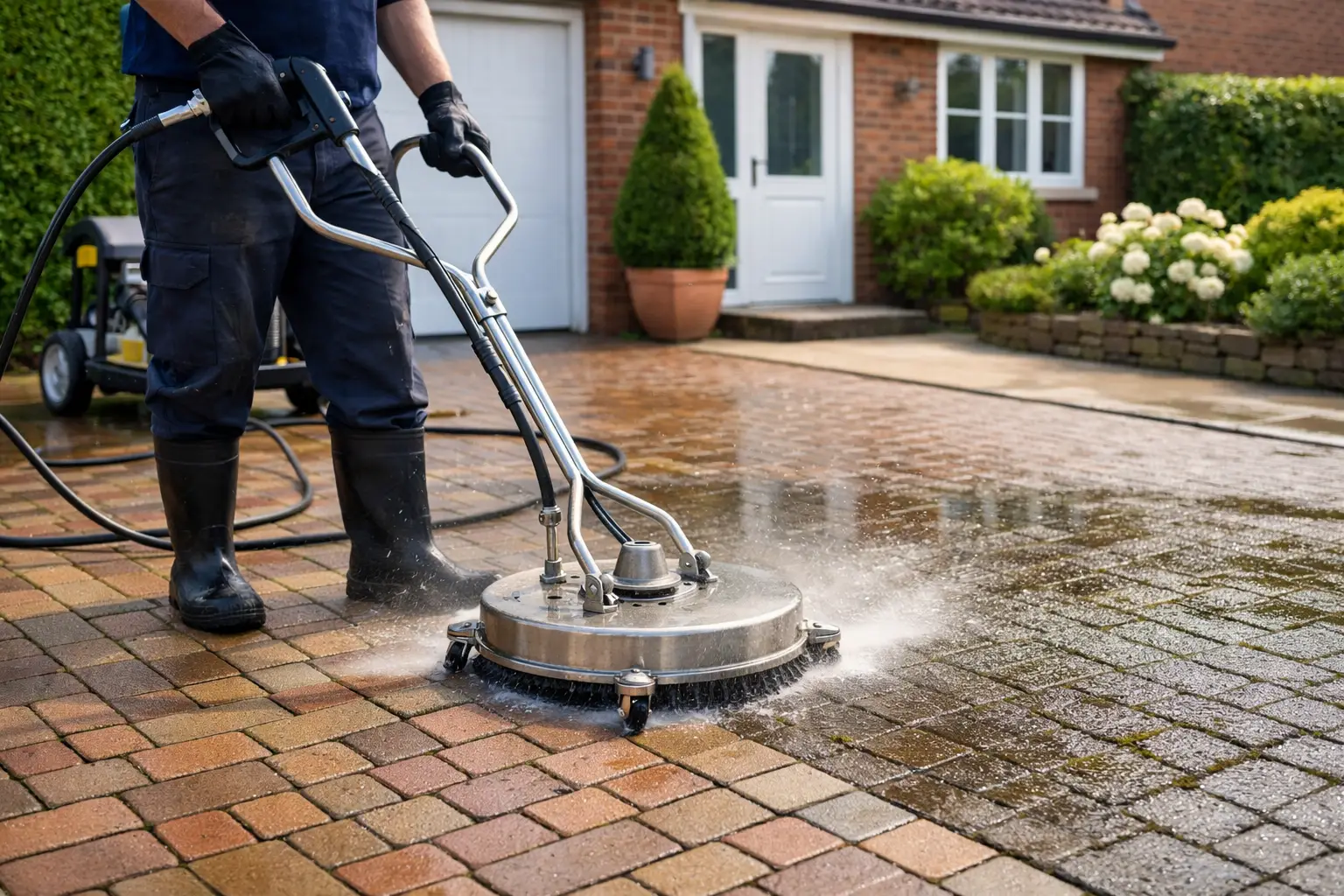
A driveway can look tired long before the rest of a property does. Green algae gathers in shaded areas, black marks settle into block paving, and weeds find their way through joints. Driveway cleaning Bolton is not simply a matter of making the surface look brighter. The useful first step is identifying what the driveway is made from, what is causing the discolouration, and whether the surface needs controlled pressure washing, a low-pressure treatment, or both.
For homeowners, landlords and property managers, the aim is usually straightforward: remove visible contamination while treating the paving with the care its condition requires. A clean driveway can improve the approach to a property, but the method matters just as much as the finished appearance.
Why driveways become dirty in Bolton
The North West's wet weather creates favourable conditions for organic growth. Moss, algae and lichen are especially common where trees, walls, vehicles or neighbouring buildings keep paving damp and shaded. On more open driveways, tyre marks, leaf staining, soil and general traffic grime may be the main issue instead.
Different contaminants behave differently. Algae often creates a green film and can leave paving slippery when wet. Moss grows through joints and around edges, holding moisture against the surface. Lichen can cling tightly to paving, while black spot and dark staining may need more than a quick rinse to improve their appearance. Oil marks can also be stubborn, particularly if they have had time to soak into porous concrete or block paving.
That is why a single approach is not appropriate for every driveway. Turning up the pressure may shift loose dirt, but it may not deal with the source of organic growth. Equally, a treatment alone may not remove embedded grime or restore the clear definition between blocks.
Driveway cleaning Bolton: choosing the method by surface
Before work begins, the surface should be assessed for its material, age, condition and existing damage. Loose blocks, cracked concrete, weakened pointing, worn tarmac and fragile edges all affect how cleaning should be approached. Water drainage and nearby planting also need consideration.
Block paving
Block paving is one of the most common driveway surfaces and often shows weeds, moss and darkened joints first. A professional clean can lift dirt from the block faces and joints, but aggressive cleaning can dislodge jointing sand. Re-sanding may therefore be required once the paving is clean and dry, depending on the condition of the driveway and the work carried out.
If a block-paved driveway has been sealed previously, the cleaner also needs to consider whether remnants of that coating are present. The surface may react differently from unsealed blocks, and patchy sealant can affect the final appearance.
Concrete and imprinted concrete
Concrete driveways can collect tyre marks, algae and oil staining, especially where vehicles regularly stand. Plain concrete is generally more tolerant than decorative surfaces, but it can still be marked by uneven cleaning or have existing cracks that warrant care.
Imprinted concrete needs particular attention. Its colour, pattern and protective finish should not be treated like ordinary paving. The appropriate method depends on the state of the surface and whether a previous coating is still performing as intended.
Natural stone and paving slabs
Stone and paving slabs vary considerably. Some are dense and hard-wearing; others are more porous, softer or prone to surface flaking. Sandstone, limestone, slate and manufactured slabs can all respond differently to water pressure and cleaning products.
For these surfaces, controlled pressure may be suitable in some areas, while lower-pressure cleaning and a more considered treatment may suit others. The goal is to remove contamination rather than force a uniform method onto materials that require different handling.
Tarmac and resin-bound surfaces
Tarmac can soften in heat and may be damaged by unsuitable cleaning. Resin-bound surfaces should also be assessed carefully, as their finish relies on the aggregate and resin remaining intact. These are not surfaces for a blanket high-pressure approach. A specialist should inspect the contamination and condition before recommending work.
Pressure washing is not the whole job
Pressure washing is useful for many driveways, particularly where dirt, moss and general grime are embedded in textured paving. Refresh Revive Exterior Cleaning, based in Bolton, uses commercial equipment selected according to the surface and its condition, including controlled pressure where it is appropriate.
However, the visible wash is only one part of a considered service. Organic growth can remain in pores, joints and shaded sections if it is not addressed properly. In these cases, a low-pressure treatment may be used alongside cleaning to target the growth itself. This can be particularly relevant on paving that has become repeatedly green in damp areas.