
Fully Insured
£5 million insurance cover, with documentation supplied on request.
Driveway cleaning in Bolton and across Greater Manchester, Lancashire and Cheshire for block paving, Indian sandstone, porcelain, concrete and tarmac — cleaned at a pressure the material can take, then put back together properly with the jointing reinstated where it is needed. Request a written quotation.
The problem
Driveways deteriorate because traffic grinds grit into the surface, jointing sand washes out of the joints, and damp, shaded paving gives moss and algae somewhere to establish.
A driveway takes more punishment than any other surface on a property. Tyres grind grit into the pores of the paving, oil and rubber mark the parking bays, and the joints slowly empty until weeds and moss have somewhere to root.
Once the jointing sand has gone, blocks lose their interlock and start to rock underfoot or under a wheel. Shaded, north-facing and tree-lined drives green over fastest, because leaf litter holds moisture against the surface all winter and feeds the algae that makes the drive slippery.
Cleaning a driveway well is therefore two jobs, not one: lifting the growth and soiling out of the surface, then reinstating the jointing so the paving locks back together instead of loosening further.
Driveway cleaning is the deep cleaning of the driving and parking surface — block paving, Indian sandstone, porcelain, concrete or tarmac — to remove moss, algae, lichen, black spot and general traffic soiling, followed by reinstating the jointing where the surface needs it.
It is a restoration of the existing surface, not a resurfacing. Sound hard surfaces can normally be pressure cleaned with a rotary head; softer, older or decorative surfaces may need lower pressure, a longer chemical dwell or a soft-wash approach instead.
Our method
We identify the surface type and its condition, check jointing, drainage and any existing damage, and agree the method before starting.
Planting, lawns, paintwork, air bricks and adjacent surfaces are sheeted or avoided, and we plan where the water and slurry will run.
Where organic growth is established, a suitable treatment is applied and left to dwell so the growth is killed rather than simply moved.
A rotary surface cleaner gives an even finish across the field of the drive; edges, kerbs and detail are hand-lanced at a pressure matched to the surface.
Slurry is rinsed away and collected where practical, drains are checked and the surrounding area is left tidy.
We walk the finished surface with you, reinstate kiln-dried sand on block paving where required, and can discuss polymeric jointing sand where it would suit the job. We explain how to keep the result.
Real result
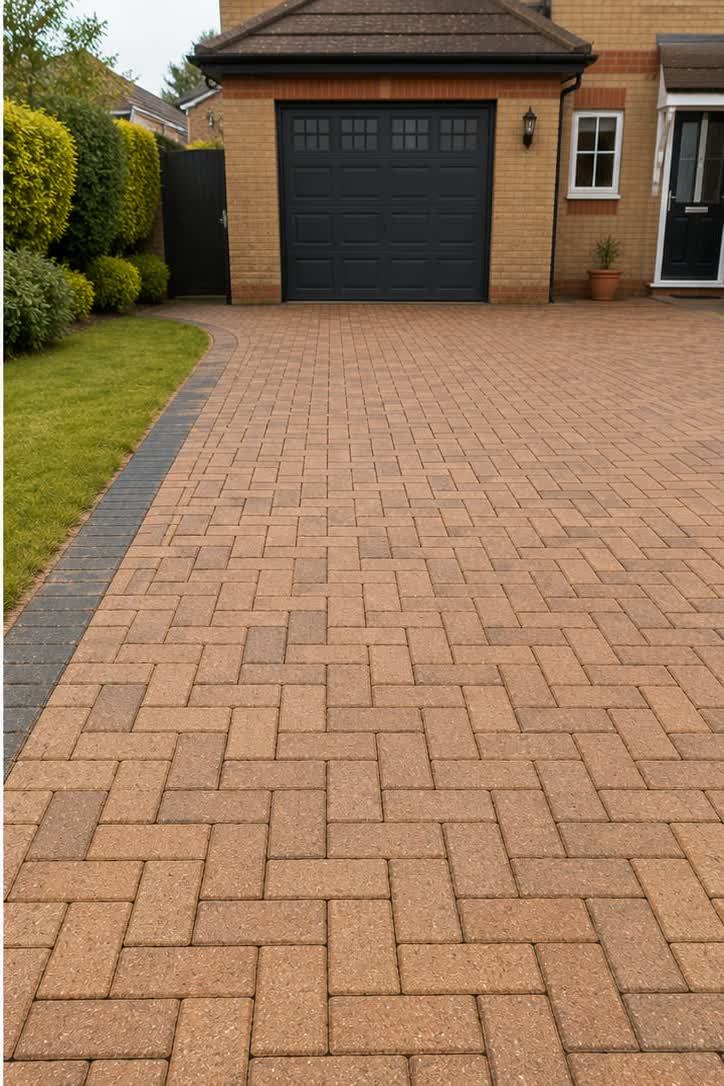
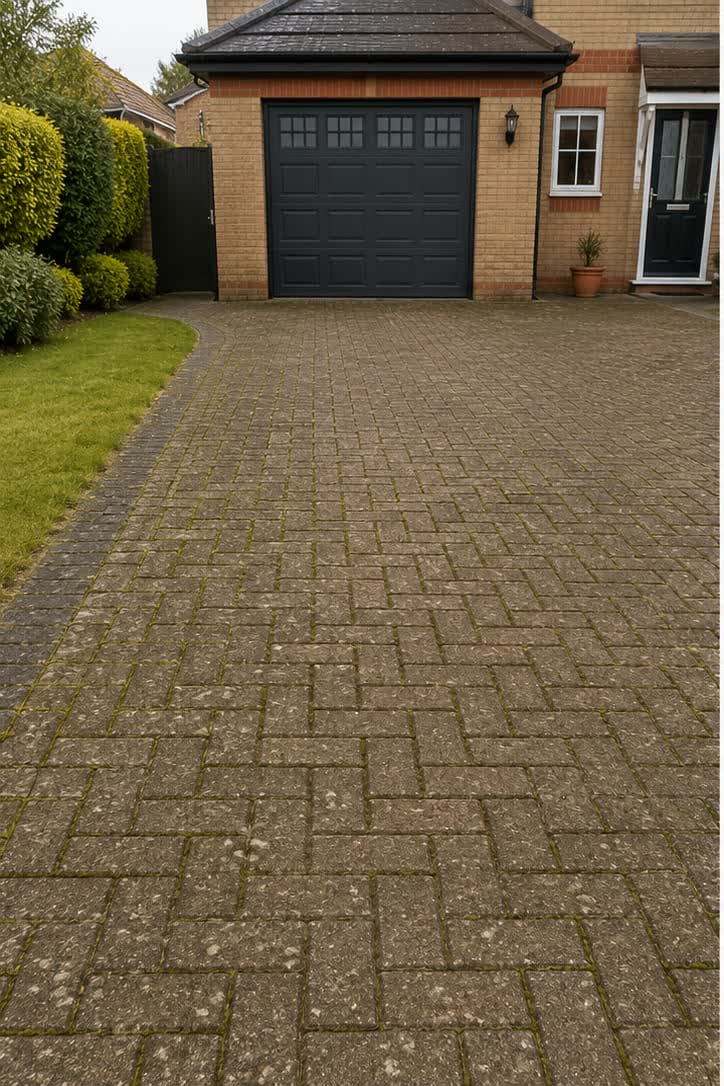
What's included
What affects your quotation
Every quotation is prepared for the property in front of us. Tell us the surface, rough size and access and we will confirm the method and the price.
Guide prices
Driveways are priced individually, but it helps to know the range before you enquire. Driveway cleaning starts from around £150 and most domestic driveways fall between £150 and £350. The figures below are typical guide ranges for domestic driveways in Bolton and the surrounding area — not fixed prices. Your written quotation confirms the actual figure once we know the surface, size, condition and access.
Ranges assume reasonable access and a surface in sound condition. Heavy weed root, long-standing staining, steps and levels or poor drainage all take longer and are reflected in the quotation.
Sealing is a separate stage, quoted on its own merits once the surface is clean and fully dry.
Block paving
Block paving is rarely a single task. Depending on the surface and its condition, the work may involve some or all of the stages below. Not every driveway needs every treatment, and we confirm what yours actually requires when we assess it.
Lifting soiling and growth out of the blocks and the joints so the original colour of the paving is visible again.
Applied where appropriate for the condition of the driveway, rather than as a default on every job.
Pressure is matched to the paving and used where the surface can take it, with the detail worked by hand where machinery cannot reach.
Considered after cleaning, where the jointing sand has been displaced or there is not enough of it left in the joints. It is assessed on the day rather than assumed in advance.
A separate option, assessed on its own merits where the surface is suitable and sealing is offered. It is not part of a standard clean and is never included by default.
The requirements depend entirely on the surface and its condition, so we set out what your driveway needs — and what it does not — before any work is agreed.
Surface care
Being straight with you
Where a surface would genuinely benefit from protection once it is clean and dry, ask about exterior surface sealing.
Before we start
The right method for the surface, not simply more pressure. Before anything is switched on we look at what we are actually cleaning: the material, the contamination on it, the condition it is already in, and whether there is cracking or earlier repair work that needs treating carefully.
We also check the practical side. An outside tap is preferred so we do not have to run hoses through your home; where an indoor tap is needed, we agree a safe hose route, take the hose out carefully and keep the connection monitored and secure. The water flow affects how quickly our equipment or water tank refills. We look at where the water will travel, whether there is a suitable drain or gully, and whether anything is likely to pool. Access, nearby walls and render, planting and delicate areas are all noted so they can be protected or worked around.
If there is no outside tap, it helps to mention it when you enquire. It is easily worked around, but it is better known in advance than found on the morning.
Photographs and existing damage
We often photograph the area before we begin — cracked paving, loose or sunken blocks, heavy staining and previous repairs. It gives an honest record of the property's condition, and it gives you a genuine before-and-after comparison once the work is finished.
If we find a defect, we would rather point it out than quietly clean over it. We will show you what we have found, adjust the method around the weaker area where that is sensible, and if continuing could do more harm than good we will stop and talk it through. Sometimes the right advice is to have another suitable tradesperson look at it first.
We would rather work carefully around a problem than knowingly make it worse.
What to expect
Cleaning can make a very large difference, but it cannot undo age. Weathering, worn surfaces, permanent staining, previous repairs and colour variation may still be visible afterwards. What we aim for is the best sensible improvement from the existing surface, and we will say so before we start if we think the result will be limited.
It is also worth not judging paving while it is still wet. Wet paving looks considerably darker than dry paving, and the same area can look noticeably lighter once it has dried out. This is where the before-and-after photographs help.
The biggest mistake is assuming pressure does all the work. When a mark will not shift, the natural instinct is to get closer with the nozzle, and that is usually where the damage is done: joint sand is washed out, weak pointing breaks up, stripes are left across the surface and softer materials are scarred. Working at a pressure the surface can take, and letting the treatment do more of the work, gives a more even result.
Black spot can be stubborn and full removal is not promised before the surface has been assessed. Oil staining can often be improved but is not always fully removed from porous paving. Old or failed sealer can leave a patchy finish once the dirt above it is cleaned away, and re-sealing is a separate consideration once the surface is fully dry.
On block paving, the cleaning stage can often be completed in a day, depending on the size, condition, contamination, water supply, drainage and layout. Re-sanding is not always the same visit: kiln-dried sand only flows down into the joints properly when the paving is dry enough, and brushed into damp blocks it tends to stick to the surface instead. Where sealing is worth doing at all, that is a separate stage again and it needs suitable weather.
Drives and patios are often different materials in different condition, so they are assessed separately even on the same visit. See patio cleaning.
Questions & answers
Customer feedback
Why us
£5 million insurance cover, with documentation supplied on request.
The same documented standard of workmanship and finish on every single visit.
Soft washing, pure water or controlled pressure — matched to the material, never guessed.
Every job recorded so you can see exactly what changed, including work at height.
Commercial-grade equipment and correctly dosed products, applied by trained operatives.
If a treatment isn't right for your property, we tell you — and explain why.
A decade of hands-on industry experience brought to every assessment and clean.
Local service area
Bolton is our base, so most driveways we clean are within a short drive of the town. We work regularly in Harwood, Bromley Cross, Egerton, Bradshaw, Heaton, Lostock, Horwich, Westhoughton, Smithills and Blackrod, where tree-lined and north-facing drives green over first and shaded block paving tends to lose its jointing sand soonest.
The paving itself varies a good deal locally — newer estate block paving, older concrete and tarmac drives, and Indian sandstone or porcelain on refurbished properties all need a different pressure and a different finish. We also cover the wider North West, so if you are just outside those towns, ask and we will tell you honestly whether we can schedule it sensibly.
Choosing a contractor
Quotations for the same driveway can differ widely because they often cover different work. Comparing these points makes them comparable.
Where we work
We cover Cheshire, Lancashire, Greater Manchester and the wider North West for homes and commercial premises of every type, with much of our multi-service work in the premium Cheshire and south Manchester areas below. Check the towns we cover or ask if you are just outside them.
We have written up how this work is planned in one area in particular — driveway cleaning in bolton.
From the journal
Our guide explains what causes the green cast, lost jointing sand and staining on North West drives, and what cleaning can realistically put right. Read why driveways go green.
Maintenance guide
Practical advice on keeping a block paved, stone, concrete or tarmac driveway in condition after a professional clean, including jointing sand, drainage and seasonal upkeep. Read how to maintain your driveway after cleaning.
Related work
Patios brought back to their original colour, with jointing and planting protected throughout the clean.
Read more →Moss removed from tiles and slate by hand, then soft washed with an appropriate treatment or soft-wash treatment. No high pressure is used on your roof covering.
Read more →Soft washing for K-Rend, silicone render, painted render and pebbledash — the method is chosen after we assess the finish, so the coating is not worked mechanically.
Read more →Low-pressure soft washing for rendered and painted elevations — algae, lichen and black streaking treated at the root. For render and walls, not roofs; roof moss removal is a separate service.
Read more →Gutter cleaning and clearing: gutters and downpipes cleared by high-reach vacuum, with camera evidence of every run before and after.
Read more →UPVC gutter faces, fascias and soffits washed down using pure water and soft brush heads.
Read more →Professional exterior window cleaning using a purified-water reach-and-wash system for a clear, streak-free finish across glass, frames and sills. Safe high-reach cleaning from ground level, with no harsh detergents and no ladders resting against the property.
Read more →Natural stone, flagging, York stone, limestone and porcelain cleaned with the care each material needs.
Read more →Conservatory roofs, frames, finials and box gutters cleaned so the light comes back into the room.
Read more →Timber and composite decking cleaned at the right pressure to lift algae without furring the grain.
Read more →Brickwork, stone walls and boundary walls cleaned of algae, staining and atmospheric grime.
Read more →Controlled high-pressure cleaning for hard surfaces that can take it — paths, steps, yards, forecourts and walls.
Read more →Pool surrounds, coping and surrounding paving cleaned and de-slimed. This service covers the surround only — not pool water, liners, filtration or internal pool systems.
Read more →Car parks, forecourts, cladding, signage and shopfronts cleaned out of hours, with RAMS supplied on request.
Read more →Quotation journey
Use the Get a Free Quote journey or the Send Photos on WhatsApp option.
Describe the surface, condition, access and the work required. Photos can help show the area.
The suitable approach and your quotation are based on the information available and the work required.
The final quotation can depend on size, surface, condition, access, treatment required, complexity and additional services.
Next step
Send us a few clear photographs, your location, the surface or area you want cleaned and a short description of the problem. We normally respond within one working day with the method we would use and the price. Where a job needs a closer look, we say so rather than guess.
Prefer email? Send your photographs and details to info@refreshrevivecleaning.co.uk or call 07549 064190.