
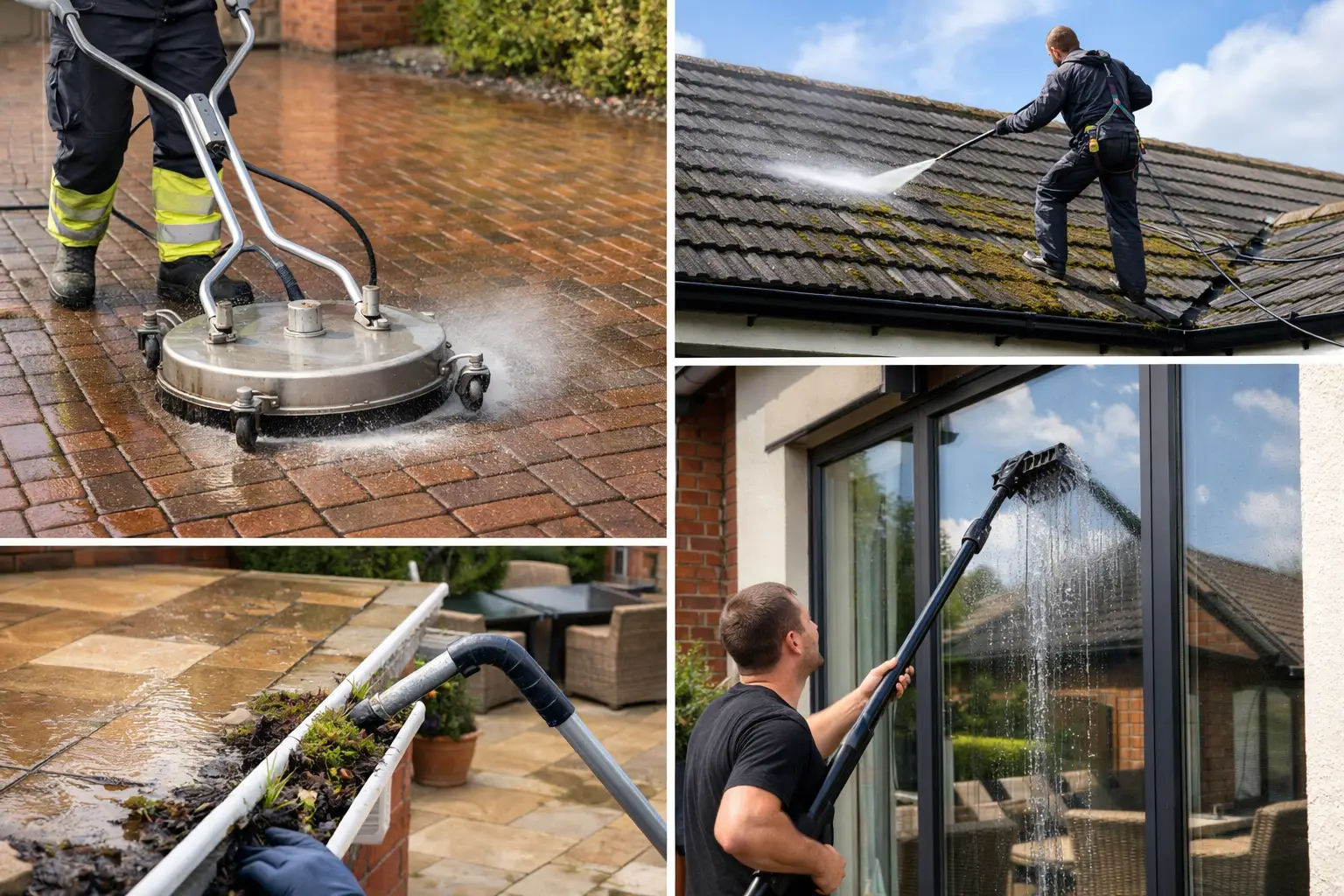
A green patio, black-streaked render or mossy roof can make an otherwise well-kept property look neglected. The right approach to exterior cleaning Cheshire properties is not simply to use more pressure. It is to identify the surface, understand what is causing the discolouration, and choose a cleaning method that is appropriate for its condition.
For homeowners, landlords and property managers, this matters because exterior surfaces age differently. Block paving holds dirt in its joints, Indian sandstone can show algae and weather staining, while render may need a low-pressure treatment rather than conventional pressure washing. A considered assessment avoids cheap shortcuts and gives each area the best prospect of a clean, even finish.
Start with the surface, not the machine
Exterior cleaning is often described as one job, but a driveway, roof, gutter and rendered wall should not be treated in the same way. The visible problem may be similar - moss, algae, lichen, traffic film or general grime - yet the material beneath it determines the sensible cleaning option.
Hard surfaces such as concrete, many driveways and certain paving areas can usually benefit from controlled pressure washing. Refresh & Revive Exterior Cleaning uses commercial equipment with pressure capability of 3,500 to 4,000 PSI, alongside hot-water capability and an on-board water supply where required. That capability is useful, but pressure is controlled for the surface rather than treated as a one-setting solution.
More delicate or coated surfaces call for a different method. Render, painted masonry, roof tiles, cladding and some natural stone may be better suited to soft washing or a low-pressure treatment. The aim is to deal with organic growth and surface soiling without relying on force where force is not the right answer.
Driveways and block paving: dealing with embedded dirt
Driveways collect more than mud. Vehicle use leaves marks and road film, while shade and damp conditions encourage algae, moss and black staining. On block paving, growth can become established between the blocks and in the joints, making a driveway look tired even when the paving itself remains sound.
A professional driveway cleaning process generally focuses on lifting surface contamination and clearing accumulated debris from the paving. When block-paving joints have been disturbed by cleaning, re-sanding may be appropriate once the surface is dry. This helps restore the jointing material that supports the blocks and contributes to a finished appearance.
Sealing can also be considered for suitable surfaces after they have been cleaned and prepared. It is not automatically necessary, and its suitability depends on the paving type, its condition and the result the owner wants to maintain. A surface with loose blocks, damaged pointing or underlying drainage issues may need repair work before cleaning or sealing is discussed.
Patios, sandstone and decking need a lighter touch
Patios are frequently affected by algae, dark spots, leaf staining and dirt carried from surrounding beds or lawns. In Cheshire gardens, shaded paths and north-facing patio areas can stay damp for longer, allowing green growth to return sooner than it would in a more open position.
The correct method depends on the material. Concrete flags may tolerate a more direct controlled-pressure clean than Indian sandstone, where technique and pressure selection need greater care. A patio can be made cleaner without trying to force every natural variation from the stone. Some marks are absorbed deep into porous materials, while weathering, mineral character and pre-existing wear are part of the surface rather than dirt to be removed.
Decking also needs its own assessment. Timber can become slippery with algae, but overly aggressive washing may affect the surface fibres. Cleaning should be planned around the deck's condition, coating and fixings, not just its appearance on the day.
Render and brickwork: clean the cause of the staining
Render can develop green algae, black marks and general dullness, especially on walls exposed to shade, rain or nearby vegetation. K Rend and silicone render require a cleaning approach that respects the coating. High pressure may not be the suitable first choice, so low-pressure cleaning and soft washing are often considered for these surfaces.
Brickwork presents another set of variables. Mortar condition, historic repairs, paint, nearby plants and the type of staining all affect the approach. A wall with loose mortar, flaking paint or structural cracking should not be treated as a routine washing job. Cleaning can improve the presentation of brick, but it cannot correct failed pointing or moisture problems within the building fabric.
This is where an assessment is valuable. It separates ordinary surface soiling from issues that may need a builder, roofer or specialist repair before cleaning takes place.