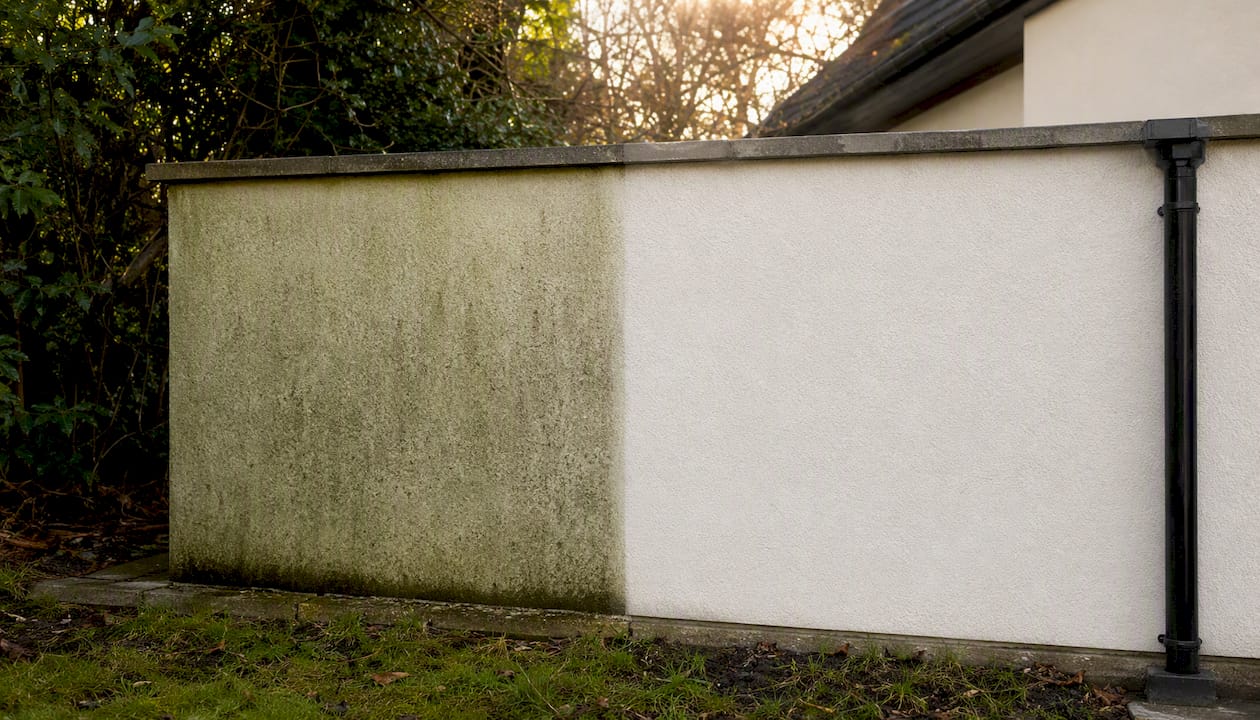
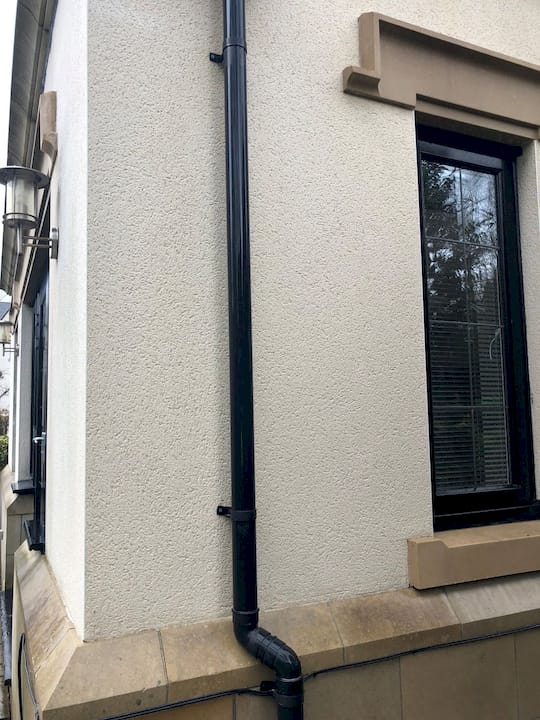
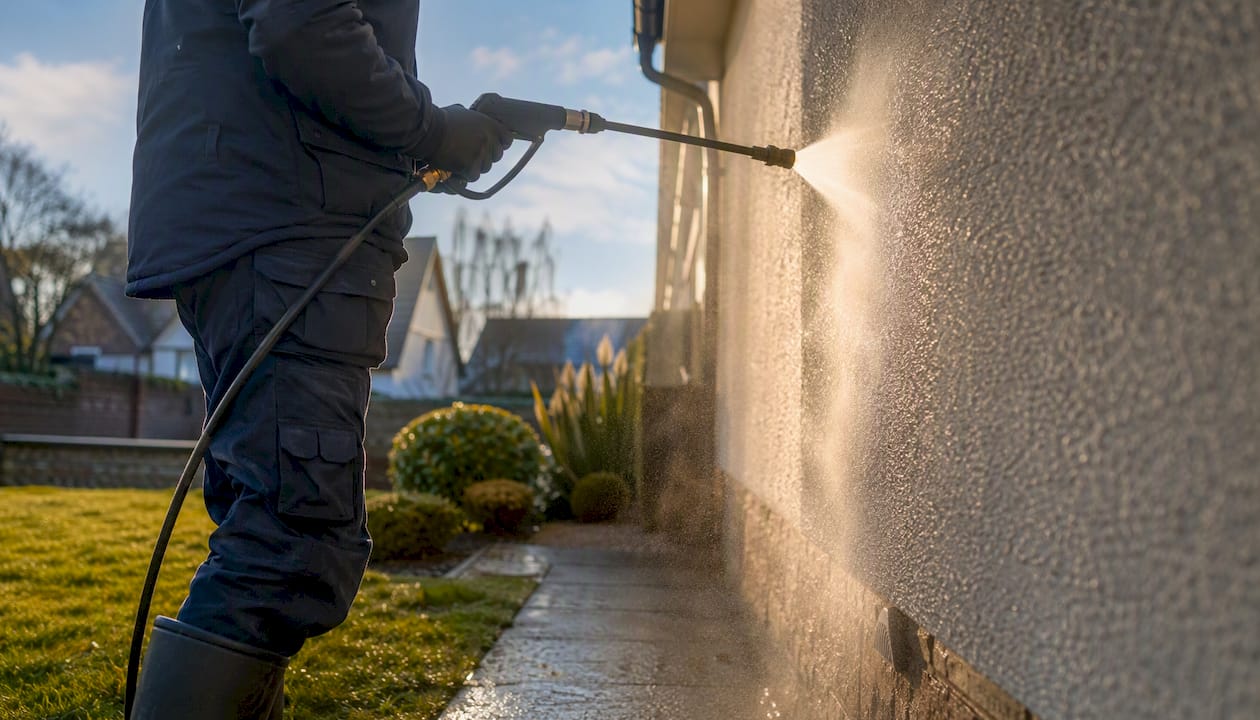
The safest, most reliable way to clean K‑Rend is a soft‑wash: a low‑pressure application of a proper biocide or algae remover, left to dwell, then rinsed gently. High‑pressure jetting is the single biggest cause of damaged render finishes, so it stays off the table regardless of how stubborn the staining looks.
Before reaching for any cleaner, work through three quick steps:
- Inspect the affected elevation and note whether the marks are biological (green or black patches), pollution grime, or rust streaking from a fixing.
- Test a small, inconspicuous patch with your chosen product and wait 24 to 48 hours to check for colour change or texture damage.
- Soft‑wash the full area, or, if the property is tall, heavily contaminated, or listed, arrange a professional site survey instead.
If you’re unsure which category your staining falls into, a five‑minute visual check against the causes below will usually tell you.
Key takeaways
Soft‑wash cleaning, backed by the correct biocide dilution and dwell time, removes K‑Rend staining without risking the render’s texture or water repellency the way high‑pressure jetting does.
| Point | Details |
|---|---|
| Inspect before treating | Identify whether staining is biological, pollution, or rust from a fixing, since each needs a different fix. |
| Always trial a patch first | Test any product on an inconspicuous area for 24 to 48 hours before full application. |
| Choose soft‑wash over jetting | Low‑pressure chemical application removes algae and grime without damaging the silicone textured finish. |
| Protect with K Pro after cleaning | A hydrophobic coating applied post‑clean can extend the gap before the next wash is needed. |
| Call a professional for height or severity | Refresh Revive offers insured surveys, method statements, and documented soft‑wash cleaning for K‑Rend across the North West. |
Where to check technical details before treating K‑Rend
For dilution rates, application specifications, and full product datasheets, go straight to the manufacturer rather than relying on secondhand advice. K‑Rend’s maintenance and aftercare page covers general upkeep guidance, while the aftercare product guide PDF sets out full technical data for Render Clean and related products. GK Products’ K‑Rend cleaning guide gives practical dilution ratios for homeowners using GK Render Cleaner. Always check the current datasheet for your specific product before mixing anything, since formulations and application rates can be updated between print runs.
Table of Contents
- Why does K‑Rend get dirty in the first place?
- Which cleaning methods actually work on K‑Rend?
- How do you clean K‑Rend safely, step by step?
- Which UK products and tools are used on K‑Rend?
- How often should you clean K‑Rend, and what does it cost?
- What safety and environmental checks matter before cleaning K‑Rend?
- Should you clean K‑Rend yourself or call a professional?
- Get a professional survey and quote from Refresh Revive
- Frequently asked questions
- Sources
Why does K‑Rend get dirty in the first place?
Render discolours because it sits outdoors, absorbing weather, spores, and pollution year after year. K‑Rend’s manufacturer is upfront about this: appearance changes from weathering, urban smog, and atmospheric spores are normal, not a sign of product failure.
Most staining on K‑Rend falls into a handful of categories:
- Biological growth — algae, mould, and lichen, usually appearing as green, black, or grey patches on north‑facing or shaded walls where moisture lingers.
- Airborne pollution — a general grey film from traffic fumes or industrial areas, most noticeable on properties near busy roads.
- Bird droppings — localised white or brown staining, typically under eaves, soffits, or overhanging trees.
- Rust streaking — orange or brown trails running from screws, brackets, or non‑stainless fixings; this is a metalwork problem, not a render fault, and cleaning alone won’t stop it recurring unless the fixing is replaced.
Micro‑climate matters more than most homeowners expect. A wall shaded by a neighbouring extension, or overhung by a mature tree, can grow algae within eighteen months, while a south‑facing gable on the same house stays clean for years. K‑Rend’s own guidance reflects this: in damp or shaded locations, an annual light wash or fungicidal application can stop organic build‑up becoming a bigger job later.
Which cleaning methods actually work on K‑Rend?
Not every cleaning method sold on the high street belongs anywhere near a K‑Rend finish. The render’s textured, silicone‑enhanced surface is engineered for weather resistance, not for being blasted at close range.
| Method | Best used for | Risk to K‑Rend |
|---|---|---|
| Soft‑wash (biocide + low pressure rinse) | Algae, mould, lichen, general grime | Low; the recommended approach |
| Controlled low‑pressure rinse (warm water, mild detergent) | Light surface dust, loose debris | Low if pressure is kept modest |
| Steam cleaning | Localised stubborn marks, small areas | Moderate; needs a trained operator and careful distance control |
| Hand cleaning with soft brush | Isolated bird droppings, small patches | Low, but slow for full elevations |
| High‑pressure jetting | Nothing on K‑Rend | High; can strip texture and reduce water repellency |
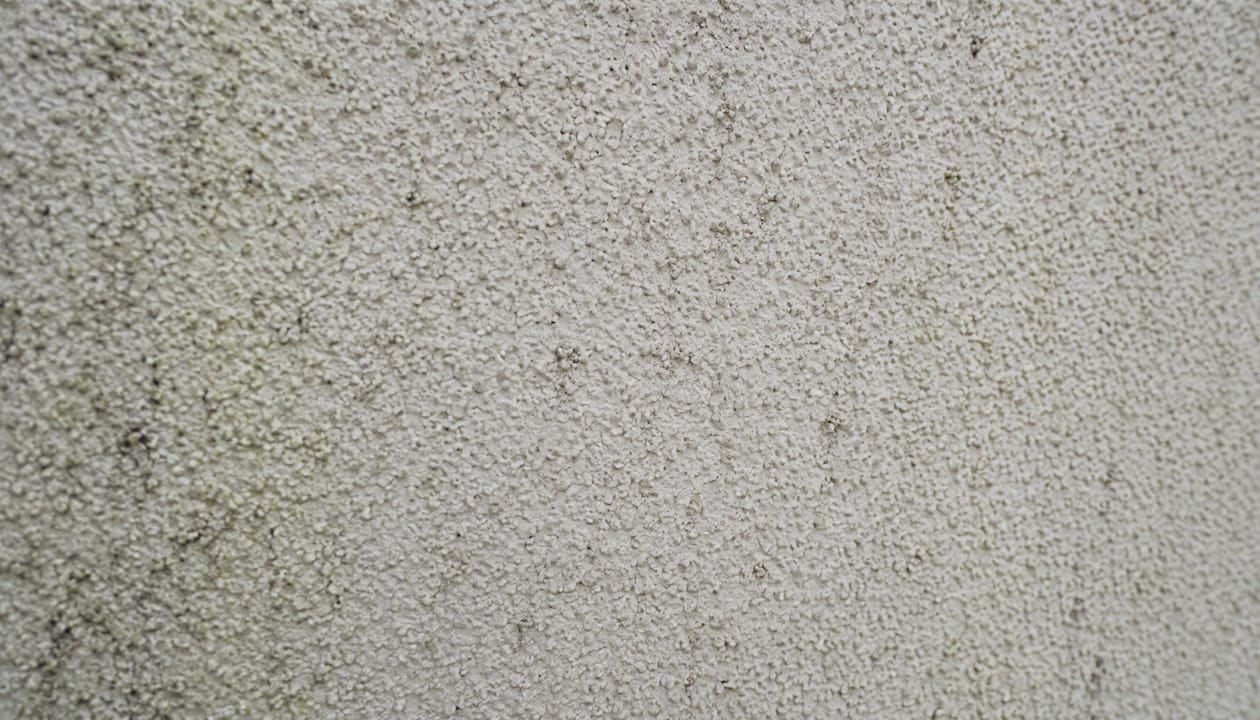
K‑Rend’s own advice backs this up directly: their top tips recommend a warm power wash with suitable detergent on a low setting, with pressure adjusted carefully because standard high settings are “not suitable for dry dash” finishes. Manufacturer guidance also repeatedly warns that high‑pressure jetting risks damaging the silicone textured finish and reducing its water repellency, which defeats the point of cleaning it in the first place.
Steam cleaning has its place, but only in the hands of an operator who understands dwell distance and won’t linger on one spot. For most homeowners, a soft washing approach covers the vast majority of K‑Rend problems without any of that risk.
Pro Tip: Biological staining comes off through chemistry, not force. Giving a biocide its full dwell time (often 15 to 30 minutes) does more work than doubling the water pressure ever will.
How do you clean K‑Rend safely, step by step?
A safe clean follows a logical sequence, whether you’re doing it yourself or briefing a contractor.
Before you start:
- Wear gloves, eye protection, and old clothing; biocides are not something you want on bare skin or in your eyes.
- Check your working height. Anything beyond a stable ladder on a single storey should go to a professional with proper access equipment.
- Protect soft landscaping, timber cladding, and any nearby vehicles with sheeting.
- Control run‑off so diluted chemical doesn’t drain straight into a storm drain or flowerbed.
The process:
- Inspect the elevation and identify whether you’re dealing with algae, general grime, or rust staining, since each needs a different response.
- Trial a small, inconspicuous patch with the diluted product and leave it 24 to 48 hours. Manufacturer guidance consistently recommends this trial‑area step before committing to a full wall.
- Pre‑wet the surface lightly with clean water if the product instructions call for it.
- Apply the biocide or algae remover evenly with a low‑pressure sprayer, working from the bottom up to avoid streaking.
- Allow the correct dwell time, as specified on the product label, so the chemical can break down the organic growth rather than just sitting on the surface.
- Rinse gently at low pressure, again working bottom to top or top to bottom consistently to avoid patchiness.
- Repeat on stubborn areas only if the first application hasn’t shifted the staining after drying.
- Let the render dry fully and inspect in good daylight before deciding whether a second treatment is needed.
Take a photo before you start and another once it’s dry. It’s the easiest way to judge whether the clean has actually worked, rather than relying on memory of how bad the staining looked a week earlier.
Which UK products and tools are used on K‑Rend?
Three products dominate UK K‑Rend maintenance, and each has a distinct role.
Render Clean is K‑Rend’s own biocide, formulated specifically for mould, algae, and lichen. It’s a water‑based professional product, and the manufacturer restricts it to professional application rather than general retail sale. That restriction alone tells you something: this isn’t a product to experiment with casually if you’ve never handled a surface biocide before.
GK Render Cleaner is a widely available UK alternative, marketed directly at K‑Rend and similar renders. Unlike Render Clean, it comes with homeowner‑friendly dilution guidance, making it the more practical DIY option for those wanting to tackle their own algae removal.
K Pro isn’t a cleaner at all. It’s a water‑based hydrophobic coating applied after cleaning, designed to reduce water‑soluble pollutant absorption and slow oil pickup, which in practice means the render should stay visibly cleaner for longer between washes.
Dilution and application rates matter more than most product labels make clear:
| Product | Type | Dilution guidance | Application rate | Use restriction |
|---|---|---|---|---|
| Render Clean | Professional biocide | 1 part product to 4 parts water | Roughly 250ml of diluted mix per m² | Professional use only |
| GK Render Cleaner | Algae/mould remover | 2:1 water to product for heavy soiling; 3:1 for light/medium | Apply, allow to evaporate, repeat if needed | Available to homeowners |
| K Pro | Hydrophobic protective coating | Per manufacturer datasheet | Per manufacturer datasheet | Best applied by a trained operator on cleaned, dry render |
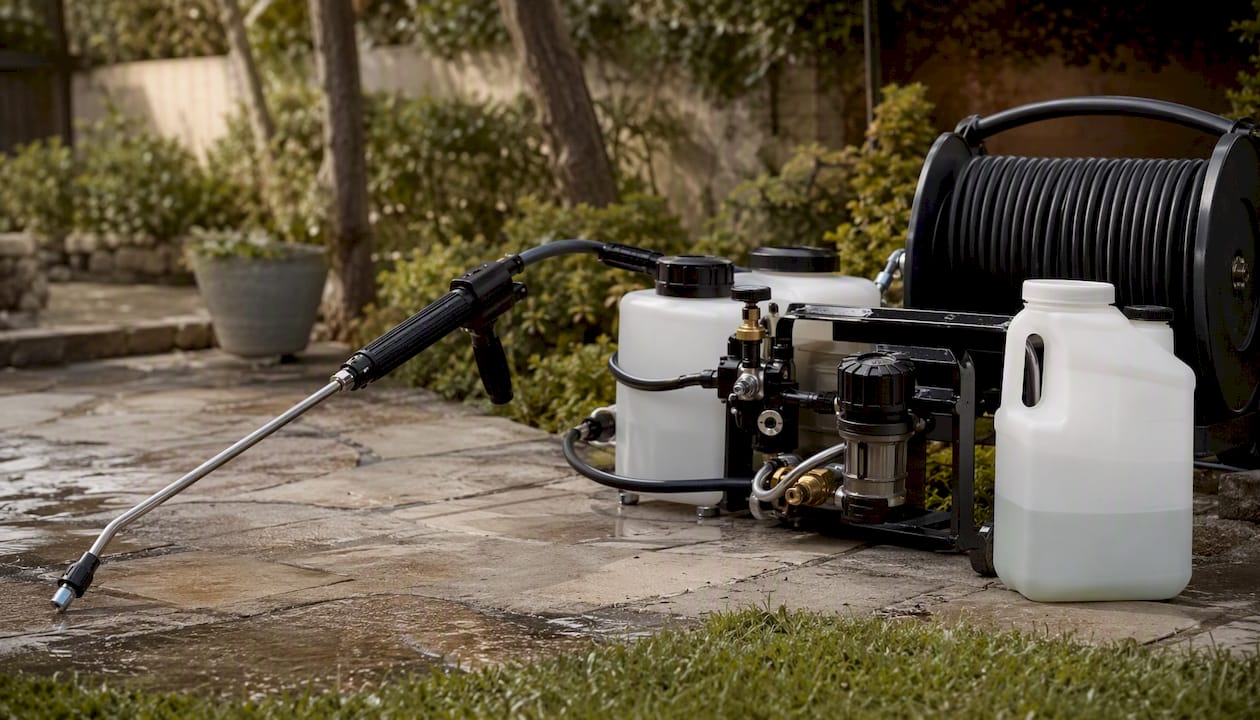
For equipment, a proper soft‑wash setup uses a low‑pressure sprayer or lance with adjustable flow, not a domestic pressure washer turned down low. The difference matters: professional soft‑wash systems are built to deliver consistent dilution and dwell time across a whole elevation, while a scaled‑down domestic jet washer still concentrates force in a way that risks patchy results or texture damage.
If you’re handling any biocide, treat it with the same respect as household bleach. A COSHH‑style check before starting, meaning you’ve read the safety data sheet and know the first‑aid steps, isn’t paperwork for paperwork’s sake. It’s the difference between a five‑minute mishap and a trip to A&E.
How often should you clean K‑Rend, and what does it cost?
Frequency depends almost entirely on the wall’s micro‑climate rather than the render’s age. K‑Rend’s own guidance points to a regular fungicidal wash for elevations that stay damp or shaded, with a fuller clean of the whole property every few years for less exposed walls, since weathering and organic build‑up are treated as routine maintenance rather than a defect.
A realistic maintenance rhythm looks like this:
- Problem elevations (north‑facing, shaded, near trees): light fungicidal wash annually.
- General elevations: a full clean every few years, or when discolouration becomes visible from the street.
- After any clean: consider a K Pro hydrophobic treatment to stretch the gap before the next wash is needed.
Professional cleaning costs for K‑Rend don’t sit at a fixed rate, and any contractor quoting a flat national price without seeing your property should raise an eyebrow. Pricing depends on surface area, contamination severity, access difficulty, whether scaffolding or cherry‑picker access is required, and listed building status. Treat every quote as site‑specific rather than comparing headline numbers.
When you’re gathering quotes, ask each contractor to confirm:
- The exact product they intend to use and its dilution rate.
- Whether the price includes a trial patch and photographic before/after documentation.
- Access method and whether scaffolding is included or charged separately.
- Whether a protective K Pro application is offered as an add‑on.
Comparing quotes on these points, rather than the bottom‑line figure alone, is the only way to know you’re comparing like for like.
What safety and environmental checks matter before cleaning K‑Rend?
Before any chemical touches the wall, a handful of checks protect you, your property, and your neighbours.