
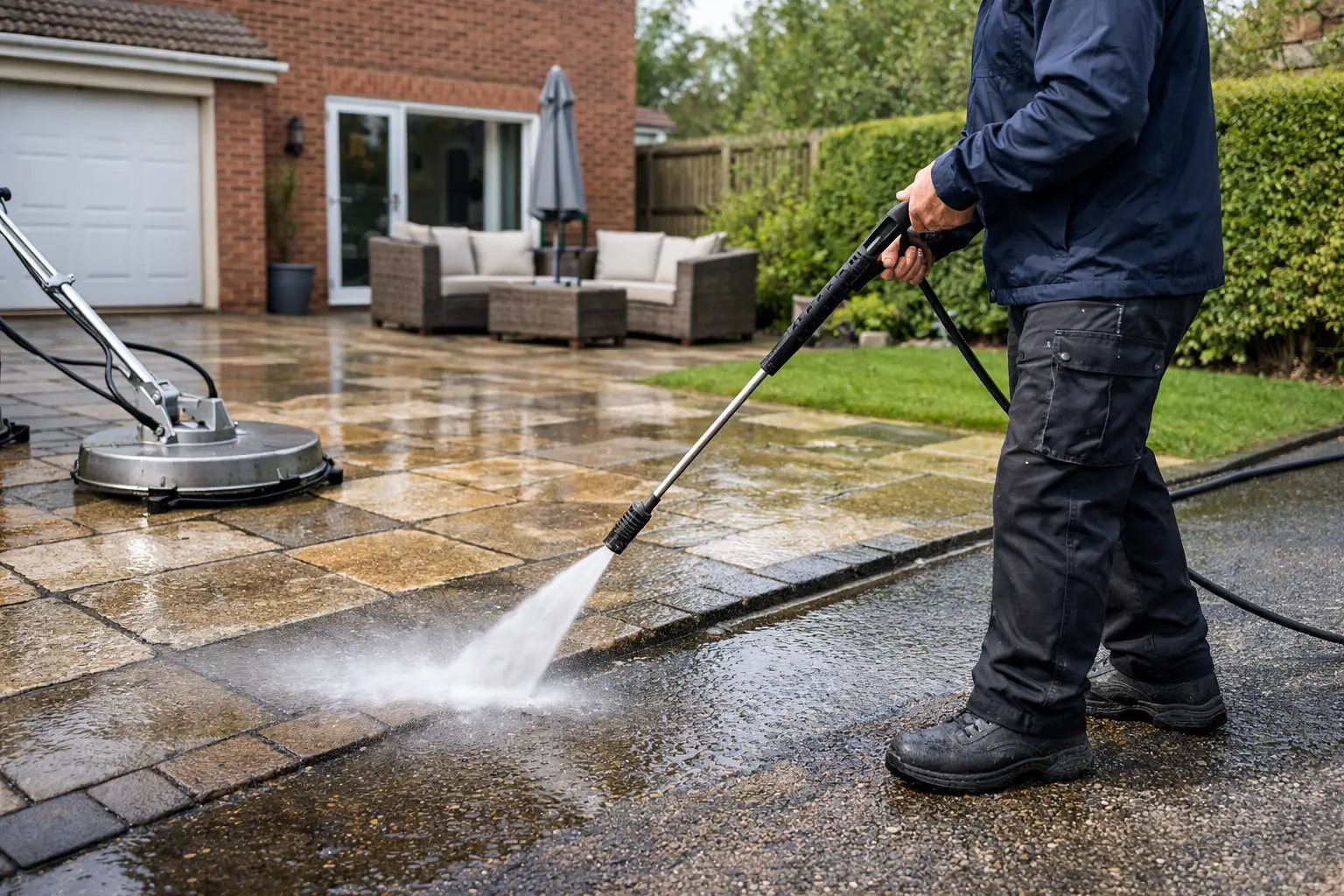
A green, slippery patio or a driveway dulled by tyre marks can make an otherwise well-kept property feel neglected. Pressure washing in Bolton can make a substantial visible difference, but the best result depends on more than using powerful equipment. The surface, the type of soiling and the condition of the material all determine whether controlled pressure washing, hot-water cleaning or a lower-pressure treatment is appropriate.
Refresh & Revive Exterior Cleaning is based in Bolton and cleans exterior surfaces for homeowners, landlords, property managers and commercial sites across Greater Manchester, Cheshire, Lancashire and the wider North West. The aim is straightforward: assess what is on the surface, choose a suitable method and leave it looking cleaner without taking cheap shortcuts.
What pressure washing can remove
Exterior surfaces collect far more than ordinary dirt. In Bolton's changeable weather, paving, paths and driveways can hold moisture for long periods, allowing algae, moss and lichen to establish themselves. Organic growth often creates the green film that becomes slippery underfoot, particularly on shaded paths, north-facing patios and areas beneath trees.
Pressure washing can also lift surface dirt, mud, traffic film, leaf staining and many marks associated with regular use. On block paving, it can clear ingrained grime from the face of the blocks and from joints that have become choked with debris. On concrete, tarmac-adjacent areas and commercial hardstanding, the approach may need to account for heavier staining and the surrounding drainage.
However, not every dark mark will disappear completely. Deep oil contamination, permanent pigment staining, ageing, mineral deposits and marks that have penetrated a porous material may remain to some degree. A professional assessment should be honest about these limits before cleaning begins.
Pressure washing Bolton properties: the surface comes first
The phrase pressure washing covers several different approaches. It does not mean applying the highest possible pressure to every area. Commercial equipment may deliver significant power, but control matters more than force alone.
Block paving and driveways
Block paving is one of the most common requests. Moss, weeds, algae and compacted dirt can leave it looking uneven in colour and poorly maintained. Cleaning can restore the appearance of the individual blocks, but it also removes loose material from the joints. Where appropriate, re-sanding is an important part of restoring block paving after cleaning, helping to refill the joints once the area is dry.
Driveway cleaning may involve block paving, concrete, imprinted concrete or other finishes. Each has different tolerances and maintenance needs. A surface with worn joints, loose blocks, failing edging or pre-existing damage needs a more cautious approach than sound, well-laid paving. Cleaning improves presentation, but it cannot correct an underlying installation or repair issue.
Patios, paving and Indian sandstone
Patios often suffer from algae, black spot, lichen, barbecue residue and general weathering. The right treatment depends on the paving itself. Dense manufactured slabs may respond well to controlled pressure washing, while natural stone, including Indian sandstone, requires more consideration. Excessive pressure or poor technique can affect the surface character, disturb jointing or leave an inconsistent finish.
Black spot is particularly frustrating because it can be firmly attached to the surface. It may need targeted treatment as well as cleaning rather than a quick rinse. The practical objective is a visibly cleaner patio and safer walking surface, while respecting the material and its condition.
Render, walls and delicate external finishes
Dirty render is not simply a pressure-washing job. K Rend, silicone render, painted surfaces, cladding and some brickwork can be harmed or visibly marked by an unsuitable high-pressure method. Algae, red staining and atmospheric dirt on render are often better addressed with a carefully selected low-pressure or soft-washing process.
This is where method selection matters most. The cause of the staining, the render type and any existing cracks or weak areas should be considered before work starts. A lower-pressure treatment may take a different route to the result, but it is often the sensible option for a more delicate finish.
Why high pressure is not always the answer
Power has a place in exterior cleaning, especially on durable hard surfaces with stubborn contamination. Refresh & Revive Exterior Cleaning uses commercial equipment capable of 3,500 to 4,000 PSI, with hot-water capability where suitable. Yet equipment specification is only one part of the job.
High pressure used carelessly can dislodge jointing, scar soft stone, force water into vulnerable areas or expose weaknesses that were already present. Conversely, a method that is too gentle may leave biological growth behind or fail to produce an even result. The right balance depends on the surface and the problem.
Hot water can be useful for certain greasy or heavily soiled areas, particularly where cold-water cleaning alone is less effective. It is not automatically necessary for every patio or driveway. Likewise, soft washing is not a substitute for all pressure washing. It is a different method used where a surface needs lower-pressure treatment and where the contamination calls for it.