Table of Contents
- Why Algae Growth on Driveway Pavers Keeps Coming Back
- How to Remove Green Algae from Block Paving
- Material-Specific Compatibility: Block Paving, Porcelain, and Natural Stone
- Best Patio Sealer for Algae Prevention: What to Look For
- How Often to Seal Driveway Pavers for Lasting Protection
- Preventative Maintenance: Stopping Algae Growth on Driveway Pavers Long-Term
- When to Call a Professional Exterior Cleaning Service
- Conclusion
Last Updated: August 15, 2026
Why Algae Growth on Driveway Pavers Keeps Coming Back
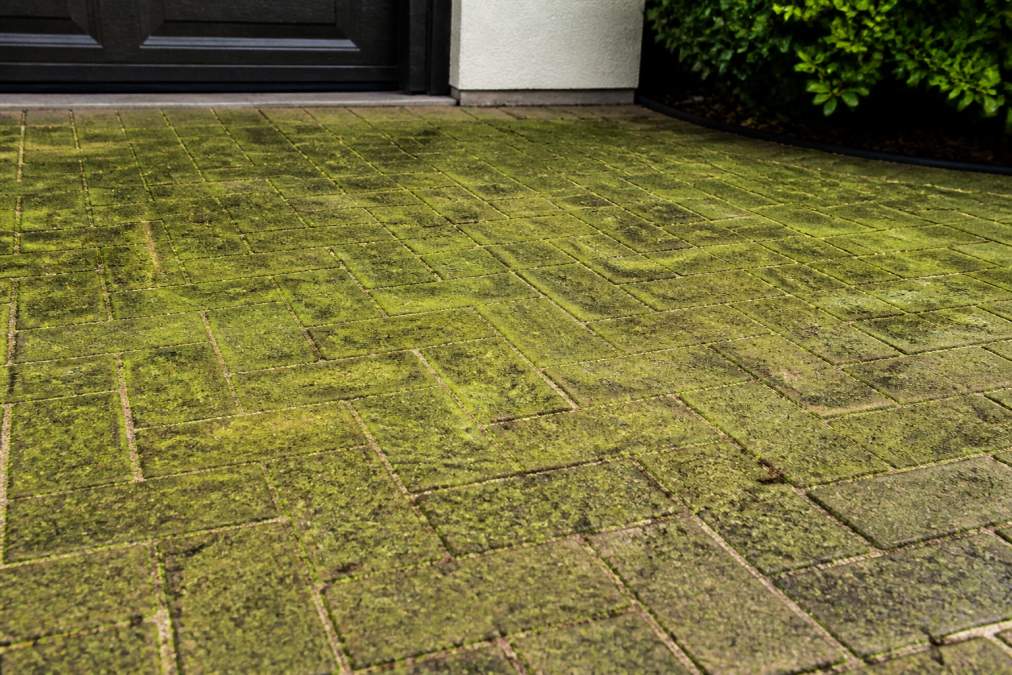
Algae growth on driveway pavers is one of the most persistent problems homeowners face because the issue is structural rather than superficial. A homeowner scrubs the surface clean, it looks brilliant for a few weeks, then the green creep returns. The mistake is treating the symptom without addressing the conditions that allow algae, moss, lichen, and liverworts to thrive.
Algae growth on driveway pavers results from biological colonisation. Algal spores are present in the atmosphere year-round and need only three things to establish: moisture, a stable surface, and limited direct sunlight. Driveway paving provides all three in abundance, particularly in the wetter months.
The Role of Surface Porosity and Moisture Retention
Surface porosity is the single biggest factor in how quickly algae and moss return after cleaning. Porous surfaces absorb water and hold it within the substrate, creating the damp microenvironment that algal spores need for germination. Natural stone and untreated concrete block paving are particularly susceptible because their open surface structure retains moisture long after rain has stopped.
Lichen and liverworts are harder to shift than standard green algae because they physically bond to the substrate, anchoring into it rather than sitting on the surface. The deeper the biological growth penetrates, the more difficult full removal becomes.
How Overhanging Vegetation and Poor Drainage Make It Worse
Poor drainage is the most overlooked contributor to recurring algae bloom. Water that pools on or near paving after rainfall creates the sustained moisture conditions that spore germination requires. Blocked drainage channels, inadequate falls in the paving layout, and low-lying areas all compound the problem.
Overhanging vegetation reduces direct sunlight that would otherwise inhibit algal growth. Tree canopy and dense shrubs create permanent shade zones where moisture retention is highest. The practical fix is twofold: clear drainage channels regularly and cut back overhanging branches where feasible.
How to Remove Green Algae from Block Paving
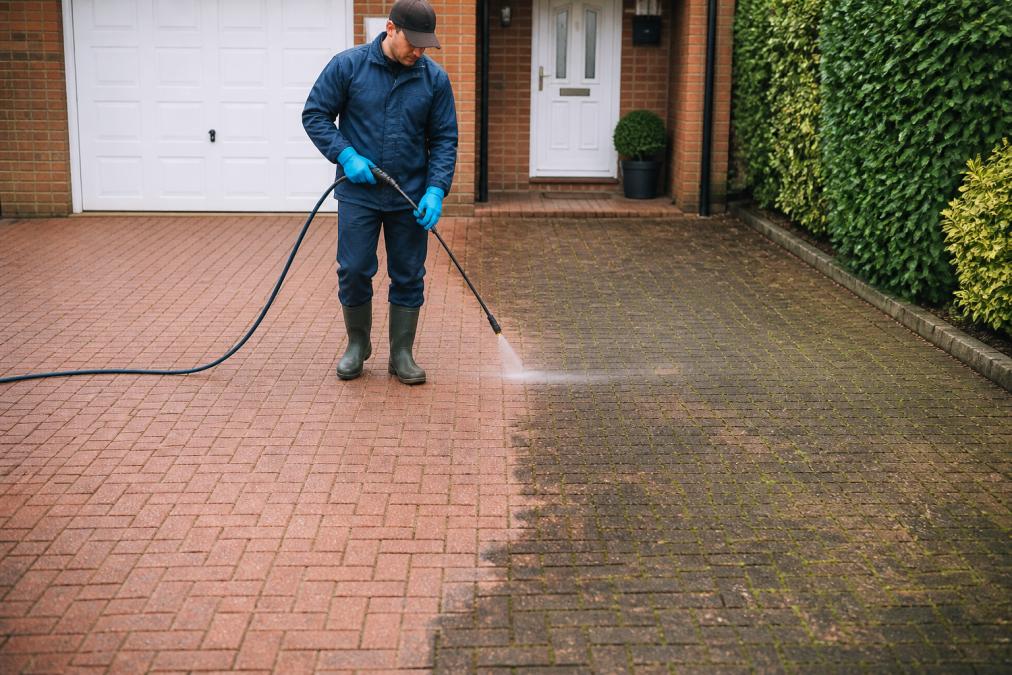
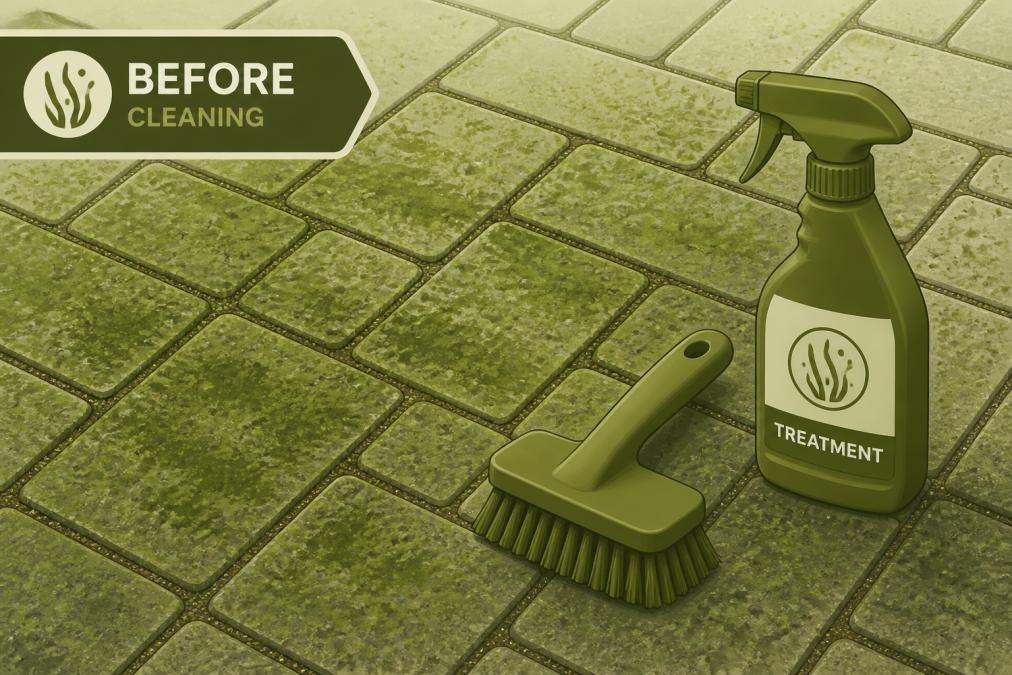
Removing green algae from block paving requires a methodical approach. Scrubbing alone rarely achieves lasting results because it removes visible growth without neutralising the spores embedded in the surface. Effective deep cleaning combines a biocide treatment with appropriate physical cleaning.
Chemical Biocide Treatments vs. Natural Cleaning Methods
Biocide treatments are solutions containing active fungicide and moss inhibitor compounds designed to kill biological growth at the cellular level. They work by disrupting cell membranes, preventing regrowth from residual spores. Most professional-grade biocides use quaternary ammonium compounds or sodium hypochlorite as their active ingredient.
Sodium hypochlorite-based treatments are highly effective on hard surfaces but require careful dilution ratio management. Too concentrated and they can bleach certain block paving colours; too dilute and they provide insufficient residual protection. According to the Health and Safety Executive's guidance on biocidal products, products used for surface treatment must be authorised under the UK Biocidal Products Regulation.
Natural alternatives use acidic or alkaline pH adjustment to create an inhospitable environment for algae. White vinegar lowers surface pH temporarily and is gentler on surrounding planting, but offers no residual protection and requires frequent reapplication. For light surface algae on well-sealed surfaces, natural methods can suffice. For established growth on porous block paving, they rarely achieve the depth of treatment needed.
| Method | Effectiveness | Residual Protection | Pet/Plant Safe | Best For |
|---|---|---|---|---|
| Sodium hypochlorite biocide | High | 6-12 months | No (diluted) | Established algae, block paving |
| Quaternary ammonium biocide | High | 6-18 months | Check label | Porcelain, natural stone |
| White vinegar / citric acid | Low-moderate | None | Yes | Light surface algae, sealed surfaces |
| Boiling water | Low | None | Yes | Moss on joints only |
| Commercial moss inhibitor spray | Moderate | 3-6 months | Varies | Preventative use post-clean |
Tools and Equipment Required for Deep Cleaning
Effective deep cleaning does not always require a pressure washer. The right toolkit depends on surface type and severity of growth.
For most residential driveways, you will need:
- A stiff-bristled brush or deck scrubber for physical agitation
- A garden sprayer or pump sprayer for even biocide application
- Personal protective equipment: chemical-resistant gloves, eye protection, and old clothing
- A low-pressure garden hose for rinsing
- Plastic sheeting to protect adjacent planting during treatment
A pressure washer set to a low bar rating can accelerate physical cleaning on strong block paving, but is unsuitable for porcelain paving and natural stone, which can suffer damage to grout lines and surface texture.
Material-Specific Compatibility: Block Paving, Porcelain, and Natural Stone
The biggest mistake in algae treatment is applying the same product to every surface. Different paving materials have fundamentally different surface porosity, pH sensitivity, and structural tolerances.
Block paving is typically concrete-based and relatively strong. It tolerates most biocide concentrations and mild pressure washing, though coloured block paving can fade with repeated sodium hypochlorite treatments. Impregnating sealants work particularly well because the substrate accepts penetrating products readily.
Porcelain paving has very low surface porosity, so algae struggles to penetrate and growth tends to remain superficial. However, porcelain is sensitive to highly alkaline or acidic treatments, which can etch the surface glaze. Use pH-neutral biocides and avoid sodium hypochlorite on coloured porcelain.
Natural stone (sandstone, limestone, slate, granite) presents the most complex treatment decisions. Sandstone and limestone are highly porous and absorb biocides readily, making them effective to treat but vulnerable to staining. Granite is far denser and more resistant. According to guidance published by Historic England on the cleaning of stone surfaces, inappropriate cleaning methods are a leading cause of accelerated stone deterioration.
Always test any biocide on an inconspicuous area and allow 24 hours before treating the full surface.
Best Patio Sealer for Algae Prevention: What to Look For
The best patio sealer for algae prevention reduces surface porosity without trapping moisture beneath the surface. A sealer that sits on top without allowing vapour transmission can cause efflorescence and subsurface damage. The sealer must both repel water and breathe.
Look for products that specify biocidal or algaecidal properties in addition to water repellency. Some sealers include a moss inhibitor compound within the formulation, providing ongoing residual protection between maintenance cleans.
Impregnating Sealants vs. Surface-Coating Sealants
Impregnating sealants penetrate the substrate and bond within the pore structure. They do not change surface appearance significantly and do not peel, flake, or trap moisture. This makes them the preferred choice for natural stone and block paving in wet climates.
Surface-coating sealants sit on top and create a film barrier, typically offering a wet-look or gloss finish. The drawback is longevity: they are vulnerable to UV degradation, foot traffic wear, and freeze-thaw cycles. Once the film breaks down, it can trap moisture beneath and accelerate biological growth.
For most residential driveways and patios, an impregnating sealant is the more durable and lower-maintenance choice.
Eco-Friendly and Pet-Safe Sealer Options
Once a biocide treatment has fully dried and cured (typically 24-48 hours after application), the risk to animals and plants is substantially reduced. However, the treatment and application phase requires care.
Eco-friendly sealers based on silane or siloxane chemistry offer strong water repellency with a lower environmental load. Water-based formulations are generally safer during application and produce fewer volatile organic compounds. For households with pets or adjacent vegetable gardens, these are worth prioritising.
As noted by the Royal Horticultural Society's guidance on garden chemical use, any chemical treatment applied near planting should be applied during dry weather, with adjacent soil covered where possible, to minimise runoff into root zones.