
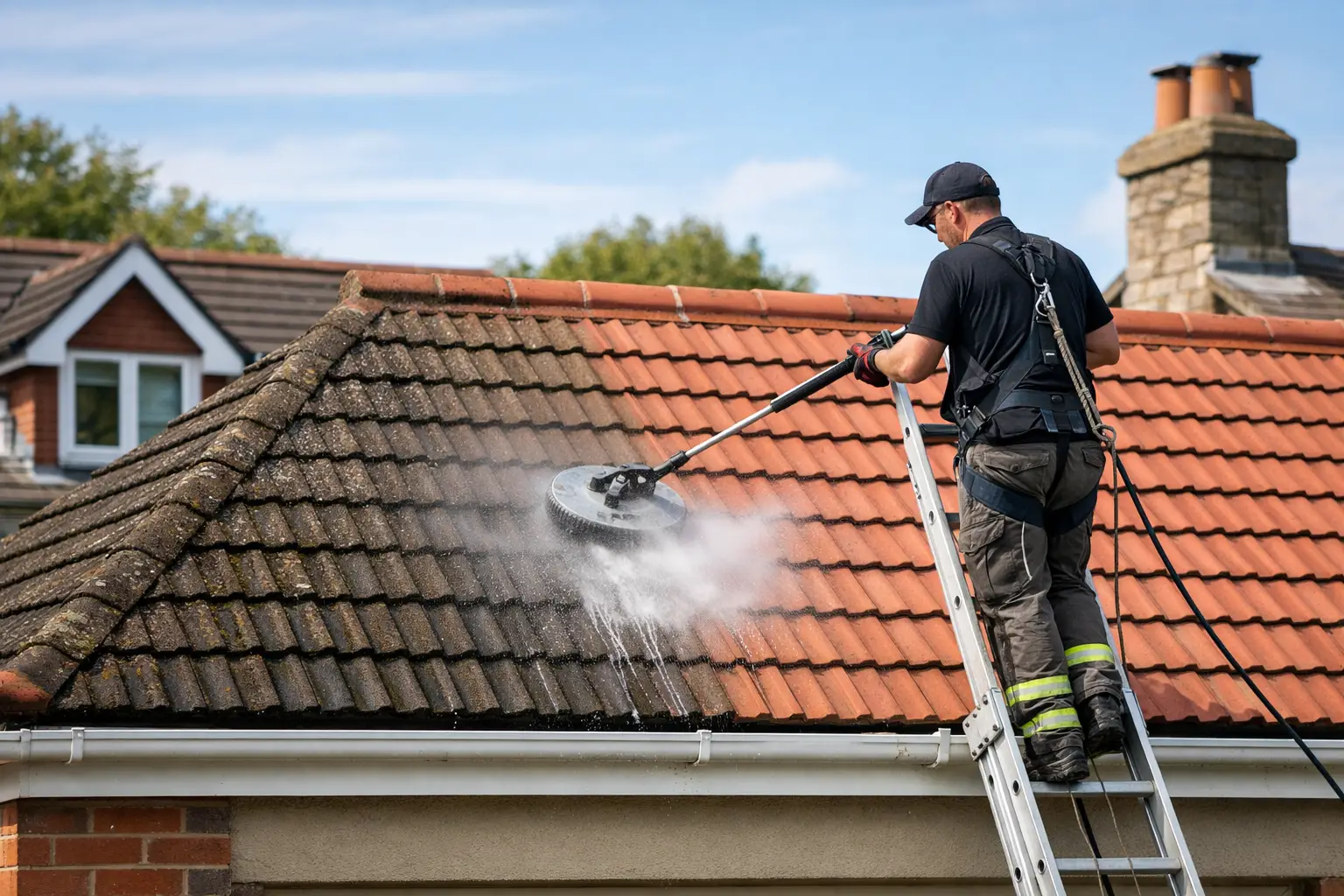
Moss spreading across a roof can make a property look neglected, but appearance is only part of the issue. Roof cleaning in Bolton should start with an assessment of the roof covering, the growth present and the condition of adjoining features such as gutters, fascias and conservatories. The right method depends on the surface. A heavy-handed approach may not be appropriate for every roof.
Refresh & Revive Exterior Cleaning is based in Bolton and provides roof cleaning and moss removal for homeowners, landlords, property managers and commercial sites across Greater Manchester and the wider North West. The aim is straightforward: remove unwanted organic growth using a considered method that suits the roof and leaves the exterior looking cared for.
What roof cleaning in Bolton can address
Roofs in Bolton are exposed to persistent rain, shade from neighbouring buildings and trees, and seasonal debris. These conditions can encourage moss, algae and lichen to establish on tiles and in roof valleys. Moss is often the most obvious problem, particularly where it forms thick clumps along tile edges or beneath the ridge.
As moss holds moisture and catches fallen leaves, it can contribute to a build-up of debris that makes regular maintenance more difficult. Pieces can also break away and collect in gutters and downpipes. This does not mean every patch of growth requires the same response, but it does make a proper inspection worthwhile before the problem becomes more widespread.
Roof cleaning can also improve the overall presentation of a house, rental property or managed building. A cleaned roof often makes dirty render, stained gutters or weathered driveways more noticeable afterwards, so some property owners choose to plan related exterior cleaning work at the same time. It is still sensible to assess each surface separately rather than assume one cleaning method suits them all.
The roof surface determines the method
A roof is not a patio. Tiles, slates, ridges, flashing, valleys and guttering all need to be considered before any cleaning begins. The type and age of the roof covering, visible condition, access and the amount of contamination affect the method selected.
Moss removal and low-pressure treatment
Where moss has built up, removal may form the first part of the work. The approach should be controlled, with attention paid to where loosened material will go. This matters around gutters, conservatories, paths, planted areas and neighbouring properties.
Low-pressure treatment may be appropriate for certain roofs and levels of biological growth. Unlike forceful washing, a low-pressure approach is designed to treat contamination without relying on high pressure as the main cleaning force. It can be a more suitable option where the roof surface and condition call for a gentler process.
The visible result may not always be identical on every roof or immediately uniform. Lichen, ingrained staining and weathering can behave differently depending on the material and how long they have been present. A reliable assessment should set realistic expectations rather than promise that every mark will disappear.
When controlled pressure may be considered
Controlled pressure cleaning has a place in exterior cleaning, but it is not automatically the right choice for a roof. Pressure needs to be matched to the surface and its condition. A method that works well on a durable driveway or paved patio cannot simply be transferred to roof tiles.
This is why the question is not simply, “Can the roof be pressure washed?” It is whether that particular roof should be cleaned in that way at all. Surface condition, tile type and access all matter. A professional should explain the proposed method clearly before work starts.
Why gutters matter when cleaning a roof
Roof moss and gutter blockages often appear together. Loose moss, leaves and silt can gather in the gutter channels, restrict water flow and build up around downpipe outlets. Cleaning the roof without considering the gutters can leave part of the maintenance problem unresolved.
Gutter clearing can be arranged as part of a broader exterior maintenance plan where required. It is also worth checking the fascias and soffits beneath the roofline. These surfaces can collect grime and staining over time, especially on sheltered elevations where moisture lingers.
For landlords and property managers, grouping roof, gutter and external cleaning requirements into a planned visit can make practical sense. The scope should remain clear, however. A quotation should identify the surfaces being assessed and the work proposed, rather than treating a whole building exterior as one generic task.
Signs it is worth arranging an assessment
A roof does not need to be completely covered in moss before you ask for advice. Early attention can be useful where growth is becoming established or debris is repeatedly reaching the gutters. An assessment is particularly sensible if you can see moss in valleys, along ridges, behind roofline features or concentrated on shaded sections.