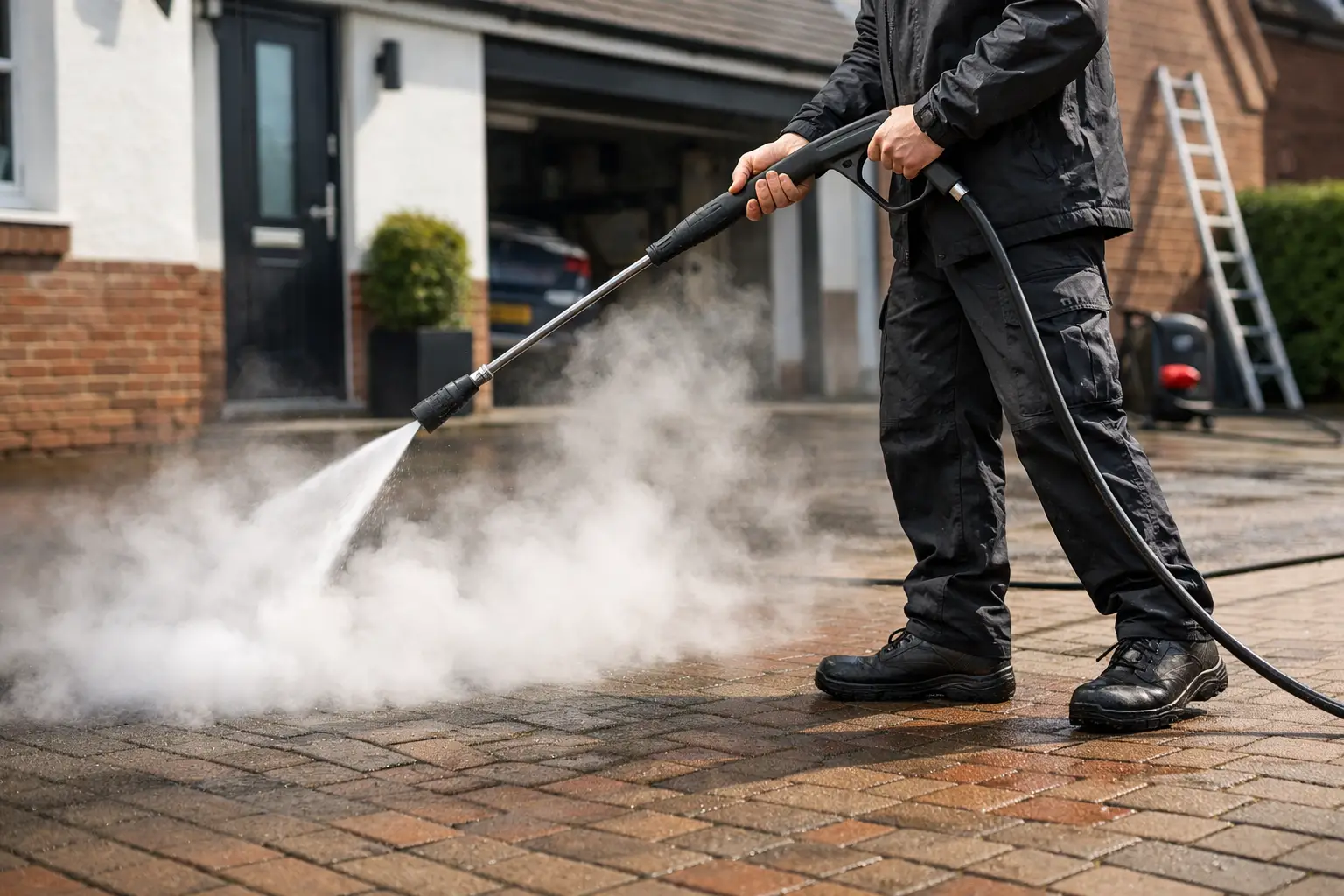
A driveway can look clean after a cold-water wash yet still feel slick around an oil mark, a bin area or the route from the back door. That is where the benefits of hot water pressure washing become most relevant. Heat helps loosen greasy, ingrained contamination that cold water may shift only partially, allowing the cleaning process to deal more effectively with the layer that is holding dirt to the surface.
For homes and commercial premises alike, the value is not simply in using more powerful equipment. It is in matching the combination of water temperature, pressure and cleaning approach to the material underfoot and the problem on it. Hot water can be highly useful, but it is not the automatic answer for every patio, wall or roof.
What hot water changes during pressure washing
Cold-water pressure washing relies largely on water force to lift dirt. That can be effective for loose soil, surface debris and some weathering. When oils, grease, food residue, tyre marks or traffic film are present, however, the contamination can cling more tightly to paving, concrete and textured surfaces.
Hot water helps soften and break down that residue as it is being cleaned. Rather than relying on pressure alone, the operator has another variable to work with. This can make a substantial difference on hardstanding areas where grime has built up gradually and ordinary rinsing is not enough.
Grease and oil release more readily
Oil-based marks are a common reason to consider hot water. Vehicle drips on a driveway, greasy barbecue residue on a patio, or contamination around commercial bin stores can leave a dark, stubborn finish. Heat can help release these deposits from the surface, so they are more likely to be lifted during cleaning rather than simply spread or left sitting in the texture of the paving.
Results still depend on the age of the stain, the surface itself and whether it has already penetrated deeply. A fresh mark on dense concrete presents a different challenge from years of oil absorbed into porous block paving. No responsible cleaner should promise that every stain will disappear, but hot water gives more scope where grease is a major part of the problem.
Less reliance on force alone
A harder blast is not always a better clean. Raising pressure indiscriminately can disturb jointing material, affect softer stone, roughen a weathered surface or leave inconsistent results. Where suitable, hot water can assist the cleaning action without making pressure the only tool being used.
That matters on older paving and mixed exterior areas, where one section may be sound concrete and the next may be natural stone, decorative edging or a delicate threshold. Controlled cleaning is about making considered adjustments, not treating every square metre in the same way.
The practical benefits of hot water pressure washing
The clearest benefit is its ability to tackle heavy soiling on durable exterior surfaces. Driveways, patios, paving, pathways and commercial hardstanding can collect more than mud and leaves. They often carry vehicle residue, black grime, spilled drinks, food waste, soot and the general film left by wet North West weather and regular use.
Hot-water capability can be especially valuable in several situations:
- greasy driveways, garage approaches and parking areas;
- bin storage areas and service yards where residue has collected;
- patios and outdoor entertaining spaces with barbecue or cooking marks;
- heavily used commercial entrances, loading areas and walkways;
- concrete and paving with ingrained traffic film or dark staining.
In these settings, a cleaner surface is easier to inspect and maintain. It can also improve the appearance of an entrance or outdoor area that has begun to look neglected. For commercial properties, the condition of paving near a front door, customer route or bin area can shape a visitor's first impression before they enter the building.
Better preparation for further exterior work
Pressure washing is sometimes the first stage rather than the final stage. A surface may need to be cleaned before re-sanding block paving, applying a suitable sealer, carrying out maintenance work or simply assessing its true condition. Removing surface grime makes it easier to see cracks, loose joints, persistent stains and areas where repairs may be needed.
This does not mean every cleaned surface should be sealed. The material, moisture condition, drainage and intended use all need consideration first. Sealing over an unsuitable or poorly prepared surface can create its own problems, so it should be discussed as a separate decision rather than an automatic add-on.
Useful for demanding commercial areas
Commercial exterior cleaning often involves a different level of contamination from a domestic patio. Hospitality premises, retail sites, blocks of flats, offices and care settings may have shared paths, refuse areas, delivery zones or entrance paving that see frequent use. Dirt accumulates faster when footfall, vehicles and waste handling are part of the daily routine.
Hot water can be a practical option for durable surfaces in these areas, particularly where grease and traffic film are involved. It may also form part of planned preventative maintenance, helping site managers address buildup before it becomes a more obvious presentation issue. The appropriate schedule will vary with the property, usage, surrounding trees, drainage and the type of surface being maintained.