
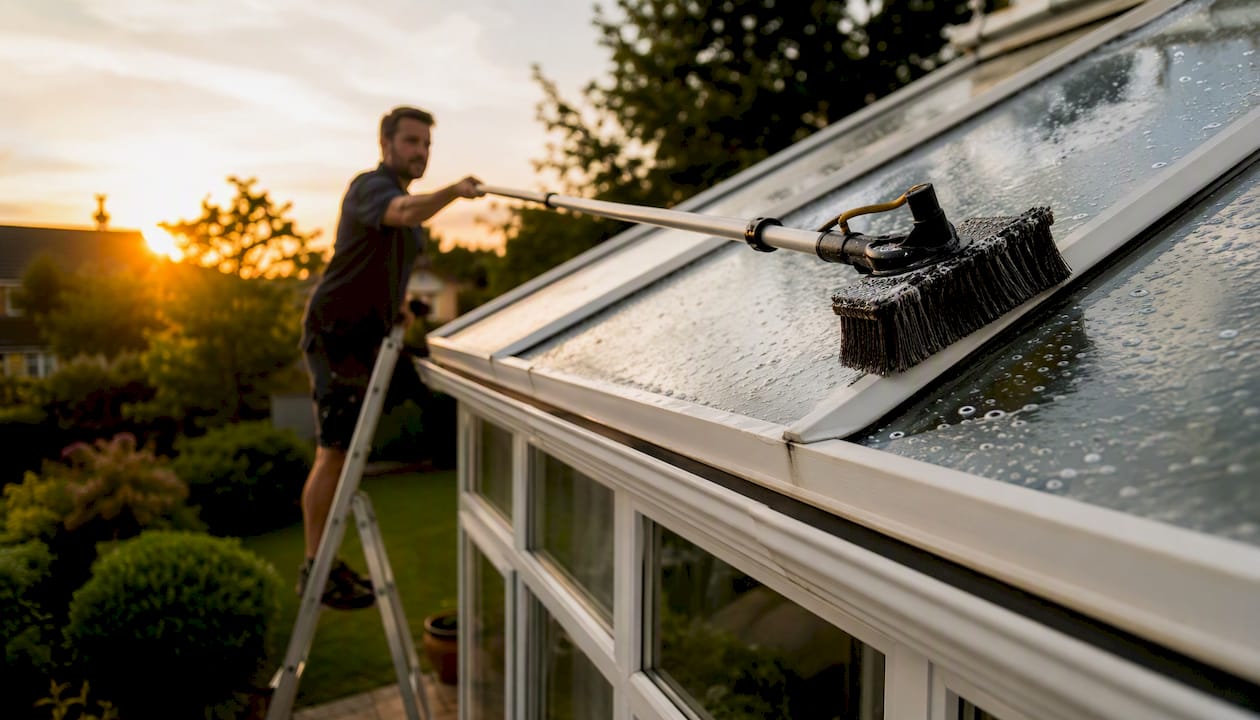
The safest way to clean a conservatory roof is with a telescopic soft-bristle brush, lukewarm water and a mild detergent, working from the ground. Never use a pressure washer and never step onto the roof itself, whatever the material.
Most homeowners can manage a routine clean this way twice a year. Which? and Checkatrade’s guidance, summarised by Axiom Eco Homes, rising sharply if seals have already failed or box gutters have been neglected for years. A single professional visit for a standard conservatory roof typically costs an amount dependent on size, access and condition.
Do this now:
- Clear loose leaves and moss with a soft brush or leaf blower before you introduce any water.
- Check your box gutters for standing water. If it hasn’t drained within 24 hours, that’s a fault, not just debris.
- Read the manufacturer’s care card if you still have it. Self-cleaning glass and polycarbonate have different rules.
Call a professional if:
- Your conservatory is single-storey but the roof pitch or height means you can’t reach it safely with a telescopic pole from the ground.
- You see green discolouration inside the polycarbonate itself, not just on the surface.
- Water is pooling anywhere for more than a day, or you notice staining on the ceiling below a box gutter.
Key takeaways
A safe conservatory roof clean uses a telescopic soft brush, mild detergent and lukewarm water from the ground, with a professional called in whenever access, fragile materials, or seal failure are involved.
| Point | Details |
|---|---|
| Safest DIY method | Telescopic pole, soft brush head, mild detergent and lukewarm water, worked from the ground. |
| Three things to never do | No pressure washers near seals, never stand on the roof, avoid abrasive cleaners on polycarbonate. |
| Maintenance rhythm | Clean the roof once or twice a year; clear gutters quarterly in March, June, September and December. |
| Budget for upkeep | Plan for roughly £200 a year on routine conservatory care to avoid larger repair bills. |
| When to call a pro | Two-storey height, internal flute algae, failed seals, or standing water not draining within 24 hours; Refresh Revive covers the North West including Bolton, Wigan and Liverpool. |
Table of Contents
- How to clean a conservatory roof step by step
- Does the cleaning method change by roof material?
- Which tools and cleaning products actually work?
- When should you call a professional instead?
- How often should you clean and inspect a conservatory roof?
- What are the biggest mistakes homeowners make?
- How Refresh Revive approaches a conservatory roof clean
- What if the stain or leak doesn’t clear after cleaning?
- Why regular conservatory care matters more than a deep clean
- If you’d rather not tackle it yourself
- Sources
How to clean a conservatory roof step by step
Homebuilding’s trade-sourced method breaks the job into six manageable stages, and it’s the sequence we’d recommend to any homeowner attempting this themselves, according to Homebuilding’s conservatory roof cleaning guide. The order matters more than most people assume: skip the soak stage and you’ll grind grit into the surface rather than lifting it off.
- Protect what’s below. Move furniture, cover planting beds near the base of the conservatory, and check nobody can walk underneath while you’re working overhead with water.
- Clear loose debris first. Use a soft brush head or leaf blower to remove leaves, twigs and moss before any water touches the roof. Wet debris smears rather than lifts.
- Soak the surface. A light spray from a hose loosens grime and dried-on bird mess, cutting down on the scrubbing needed later.
- Wash in sections, top to bottom. Work with a telescopic pole fitted with a soft brush head and a mild detergent solution, moving from the ridge down towards the gutter line so dirty water runs off rather than back over cleaned panels.
- Rinse thoroughly. Detergent residue left on glass or polycarbonate dries as a hazy film, so a clean-water rinse from the same telescopic setup finishes the job properly.
- Dry, inspect and check the frames. Once the roof has drip-dried, give the uPVC or aluminium frames a wipe and look closely for cracked seals, lifted flashing or standing water.
Tools mapped to this job: a telescopic water-fed pole for steps four and five, a soft brush head for step two, a garden hose with a spray attachment for steps three and five, a bucket for mixing detergent, and microfibre or soft cotton cloths for the frames in step six.
Ladder safety deserves its own line here, because most conservatory roof injuries happen at ground level, not on the roof. If you use a ladder to reach the eaves rather than working entirely from the ground, always have someone foot it, and never lean it against uPVC guttering or fascia, which flexes and can give way under sideways pressure.
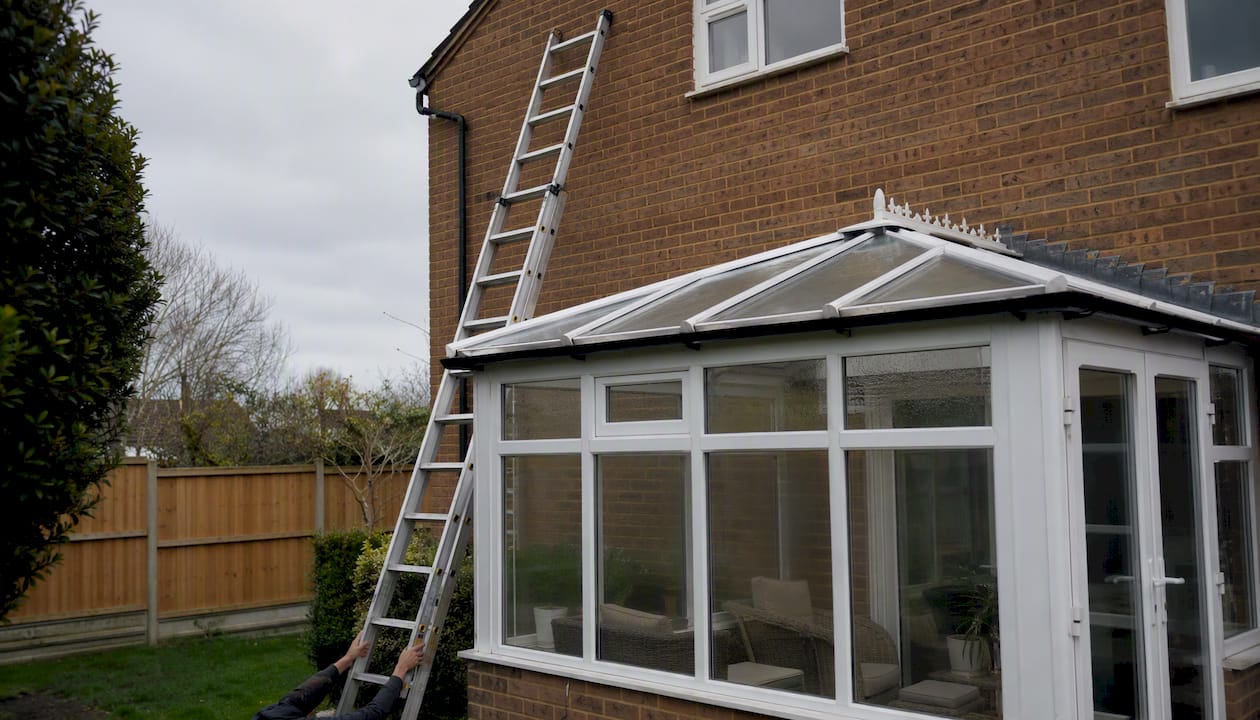
Pro Tip: Do the whole job on an overcast, mild day. Direct sun dries detergent onto the glass before you can rinse it off, leaving streaks that need a second pass to shift.
Does the cleaning method change by roof material?
Yes, significantly, and this is where most DIY damage happens. Glass, polycarbonate and self-cleaning glass each have different tolerances, and treating them all the same way is how warranties get voided.
| Roof material | Safe method | What to avoid | Pressure washing? | Recommended frequency |
|---|---|---|---|---|
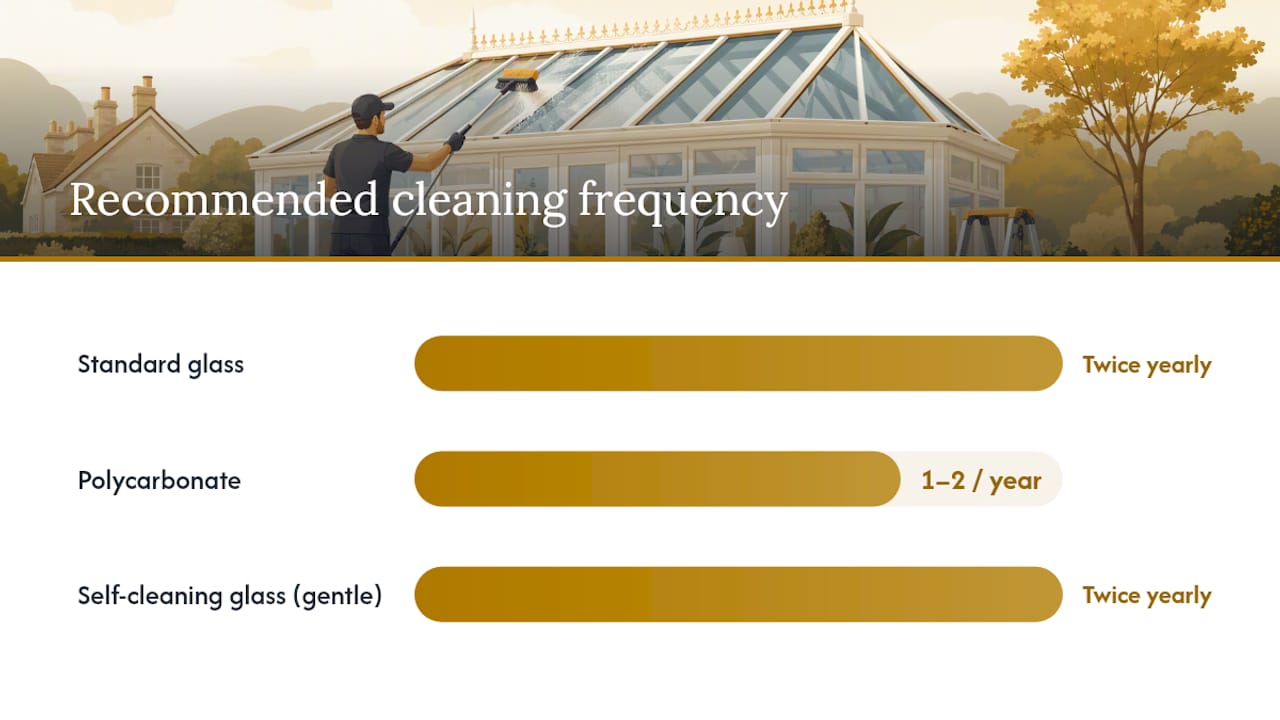
| Standard glass | Mild detergent, soft brush, warm water rinse | Metal scrapers, abrasive pads | Not recommended near seals | Twice yearly |
| Polycarbonate | Lukewarm water, mild dishwashing detergent, soft cloth or sponge | Abrasive cleaners, solvents, stiff brushes | Avoid entirely on domestic panels | Once or twice yearly |
| Self-cleaning glass (Pilkington Activ / Conservaglass) | Very light detergent solution, soft microfibre only | Any abrasive tool, solvent cleaners, squeegees | Never | Twice yearly, gentler pass |
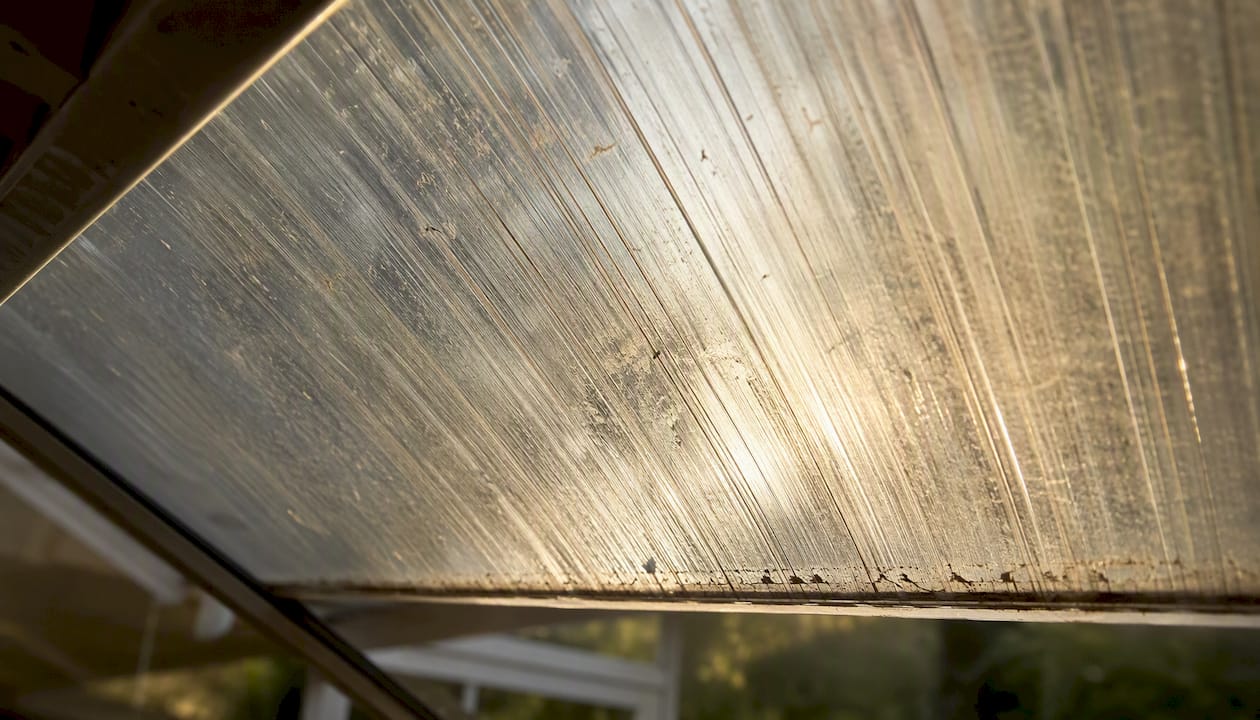
Polycarbonate is the material most homeowners damage without realising. Brett Martin’s technical guidance is unambiguous: it scratches easily, so cleaning should stay limited to lukewarm water, mild detergent and soft cloths, with abrasive cleaners and sharp tools ruled out entirely. Once a polycarbonate panel scratches, dirt collects in the groove permanently, and the panel starts to look grey no matter how often you clean it.
Self-cleaning glass carries a different risk. The coating that gives Pilkington Activ and Conservaglass their self-cleaning property is photocatalytic, meaning it needs UV light to break down organic dirt before rain washes it away. Abrading that coating with a stiff brush or exposing it to the wrong chemistry stops it working, permanently, in that patch. Manufacturer guidance also recommends waiting roughly a week after installation before cleaning it at all, giving sealants time to cure and the coating time to activate, according to Conservatoryland’s maintenance guide.
Common failure modes to watch for:
- Fine scratch patterns on polycarbonate that trap dirt and never fully clean off again.
- Patchy areas on self-cleaning glass where water beads instead of sheeting evenly, a sign the coating has been damaged.
- Perished or split seals on older glass conservatories, usually first noticed as a faint whistling in wind or a damp smell after rain.
Which tools and cleaning products actually work?
Getting the shopping list right matters more than most cleaning advice suggests, because the wrong product can undo months of careful maintenance in one pass.
Safe kit worth buying or hiring:
- A telescopic water-fed pole, available from retailers like Screwfix and B&Q, ideally with interchangeable soft brush heads.
- Soft-bristle brush heads designed for glass and uPVC, not the stiffer versions sold for driveways or render.
- A garden hose fitted with a spray head, plus a bucket for mixing detergent.
- Microfibre cloths for frames and any final drying pass on glass.
- A mild washing-up liquid diluted in warm water, or a specialist glass cleaner such as those from HG, formulated to rinse clean without streaking.
What to avoid entirely: pressure washers on any conservatory roof, because manufacturer guidance repeatedly warns that high pressure forces water under seals and lifts protective coatings, according to Conservatoryland’s maintenance guidance. Also rule out abrasive scourers, metal scrapers, and solvent-based cleaners like acetone or white spirit, which strip sealant and can craze polycarbonate.
Manufacturer notes on caution: Palram’s care guidance allows pressure washers on large commercial polycarbonate installations, but only with the nozzle held well back from the panel surface. That caveat doesn’t really apply to a domestic conservatory roof, where the panels sit close together and the margin for error is much smaller.
Buying tips worth knowing before you order a pole online: most single-storey conservatories need a pole extending to around 4 to 6 metres to reach the ridge comfortably from the ground. Soft heads are correct for glass and polycarbonate; stiffer bristle heads belong on render or masonry, never on glazing. If you’re using a water-fed pole with an inline filter, a basic carbon filter is enough for occasional domestic use, professional-grade deionising filters aren’t necessary unless you’re cleaning weekly.
Pro Tip: Kärcher’s own guidance for domestic conservatory cleaning favours telescopic brush tools over pressure attachments precisely because glazing seals can’t tolerate concentrated jets, according to Kärcher’s conservatory cleaning guide. If you already own a Kärcher pressure washer for patios or driveways, that’s the wrong tool for this particular job.
When should you call a professional instead?
Some jobs genuinely aren’t sensible to tackle from a stepladder with a garden hose, and recognising the red flags early saves both money and a trip to A&E.
Red flags that mean it’s time to book a specialist:
- The conservatory sits above a single-storey extension or garage, putting the roof at two-storey height or awkward reach.
- You’ve spotted green algae inside the polycarbonate flutes rather than on the surface, which usually signals breather tape or end-cap failure that cleaning alone won’t fix.
- Seals have visibly perished, cracked or come away from the frame.
- Box gutters are blocked and water isn’t draining within 24 hours of rain stopping.
- The roof material is fragile, aged, or you simply can’t tell what you’re dealing with.
Professionals approach the job differently, and the difference isn’t just about height access. A specialist typically uses purified water-fed poles that leave no detergent film, combines this with controlled soft washing rather than any form of pressure, and inspects gutters and seals as part of the same visit rather than treating cleaning and maintenance as separate jobs. Most reputable firms, including Refresh Revive’s conservatory cleaning service, also document the job with before and after photos, which matters if you’re trying to track whether a stain is getting worse year on year.
| Job type | Typical UK price band | What pushes the price up |
|---|---|---|
| Standard conservatory roof clean | £80–£150 | Extra height, steep pitch, heavy moss |
| Roof clean plus gutter clearing | £200 | Blocked box gutters, difficult access |
| Full clean with seal inspection | £150–£280 | Older glazing, visible seal wear, larger roof area |
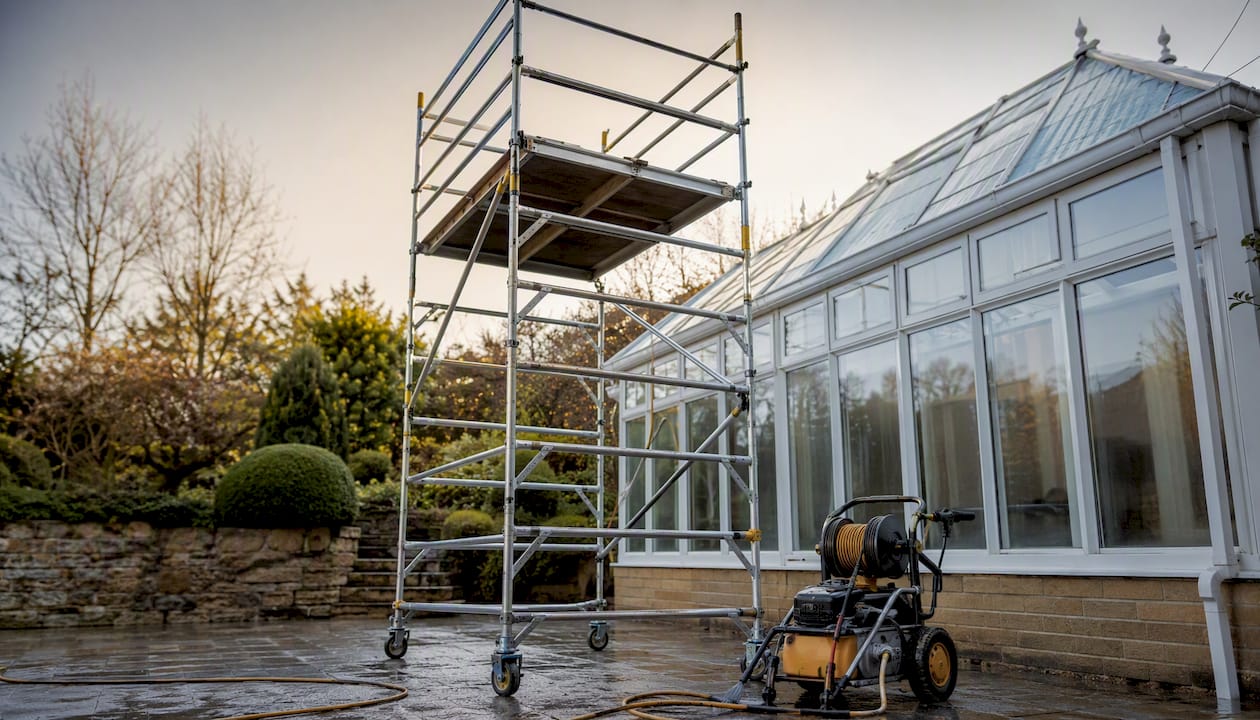
Access equipment (scaffold towers or a cherry picker for anything genuinely out of reach) adds to the cost but removes the risk entirely, which is usually the better trade for a homeowner without head-for-heights experience.
How often should you clean and inspect a conservatory roof?
A quarterly rhythm for gutters and a twice-yearly rhythm for the roof itself covers most UK properties without over-servicing them.
- Gutters: every quarter (March, June, September, December). Clearing leaf litter and moss four times a year stops box gutters overflowing, which is the single most common cause of internal leaks in conservatories.
- Roof clean: once or twice a year. Spring and autumn passes handle most UK climates, though a conservatory under overhanging trees or near a busy road with heavy pollution will need more frequent attention, as Homebuilding’s guidance notes when it comes to seasonal buildup near conservatory roof cleaning routines.
- Seal checks: twice yearly. A quick visual inspection each spring and autumn catches perishing seals before they let water in.
- Frame cleaning: twice yearly, ideally alongside the roof clean, since grime on uPVC frames accelerates the same way it does on the glazing above.
Sticking to this schedule isn’t just tidiness. Which? and Checkatrade’s guidance, summarised by Axiom Eco Homes, estimates that routine care reduces the risk of running into repair bills of £800 to £2,500 for the kind of structural leak or seal failure that comes from years of neglect. A £200 annual maintenance habit is considerably cheaper than one emergency call-out for a rotten frame.
Blocked box gutters deserve special mention, because they’re invisible until they fail. Water backing up behind a blocked gutter finds the weakest seal in the system and works its way in, usually appearing as a stain on the conservatory ceiling weeks after the actual blockage occurred. Regular clearing through a service like Refresh Revive’s gutter and soffit cleaning catches this before it becomes an interior repair job.
What are the biggest mistakes homeowners make?
A handful of habits cause almost all the avoidable damage we hear about, and every one of them is easy to fix once you know to look out for it.
The non-negotiable safety rules:
- Never walk, kneel or lean on conservatory glazing of any kind. It isn’t designed to bear weight and it will fail.
- Work from the ground using telescopic equipment wherever the roof height allows it.
- If a ladder is unavoidable, always have someone foot it and never rest it against uPVC guttering or window frames.
The mistakes that actually cause damage:
- Pressure-washing anywhere near seals, which manufacturer guidance consistently rules out because high-pressure water forces its way under the seal line, according to Conservatoryland’s maintenance guide.
- Using an abrasive scourer or stiff brush on polycarbonate, which leaves fine scratches that trap dirt permanently.
- Running a squeegee across self-cleaning glass, which can scrape away the photocatalytic coating that makes it self-cleaning in the first place.
- Leaning ladders against fascia boards or guttering rather than a proper stand-off, which stresses fixings that were never designed to take that load.
Pro Tip: After any clean, however light, check your original installation paperwork for care instructions specific to your glazing. Some manufacturer warranties are voided by using the wrong cleaning product, even if the damage never actually shows.