
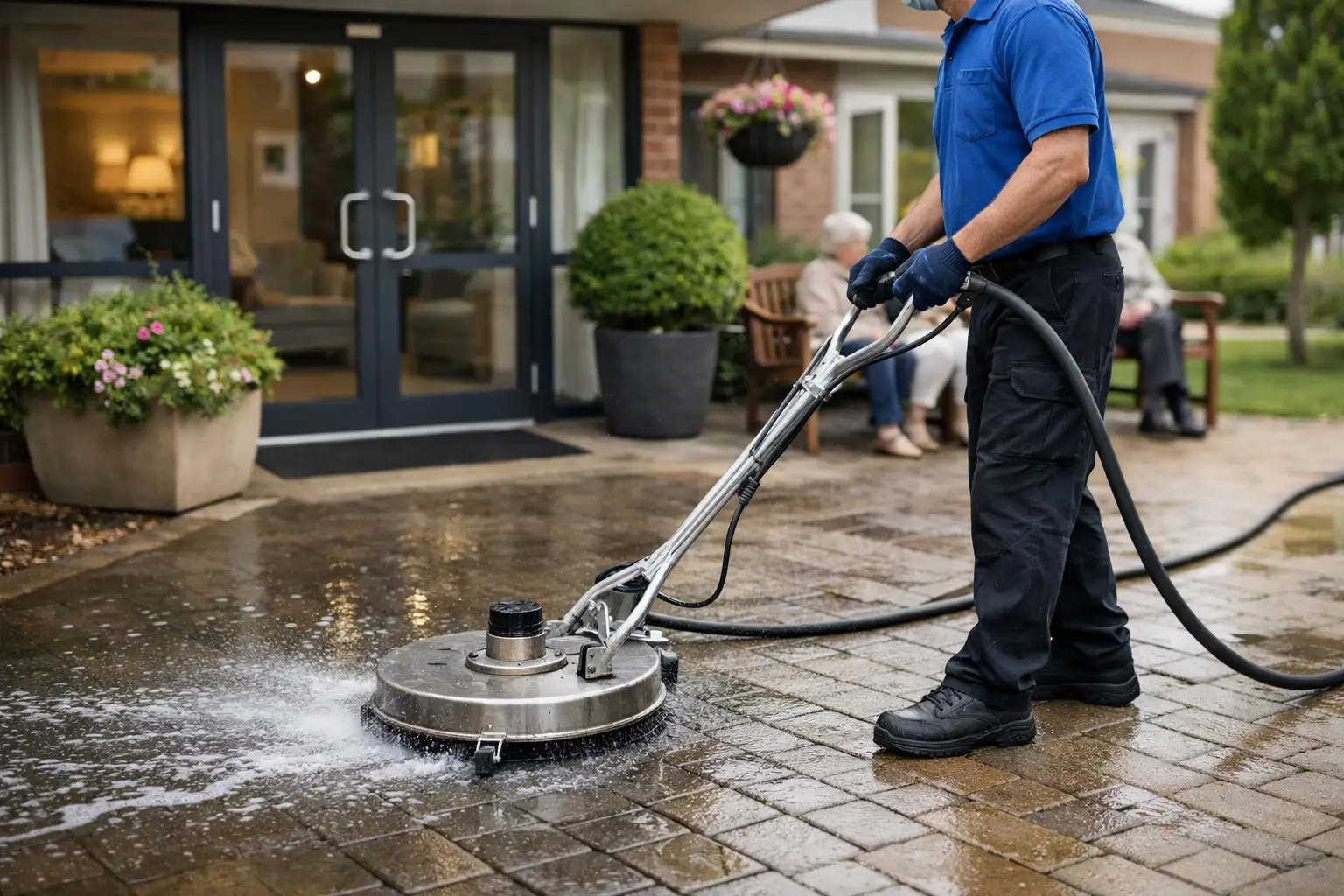
A walkway can look only mildly weathered from a distance, yet become a daily concern when algae, moss, leaf debris and ingrained dirt build up on the surface. For a care setting, that route is used repeatedly by residents, visitors, staff, contractors and mobility equipment. Care home walkway cleaning is therefore about more than improving appearances. It is a practical part of managing exterior areas that need to remain clear, presentable and easier to use.
The right approach depends on the paving material, the contamination present, drainage and how the route is used. A heavily shaded path beside a building needs different consideration from an open tarmac approach or a block-paved courtyard. Cleaning should begin with the surface, not with a one-method-fits-all approach.
Why walkway condition matters in care settings
Entrances and connecting paths create an immediate impression, but they also carry a great deal of everyday traffic. A green film on paving, loose moss between blocks or damp organic debris around a threshold can make an otherwise well-kept site feel neglected. In wet North West weather, those conditions can return quickly where shade, poor drainage or overhanging planting keeps surfaces damp.
For facilities and property managers, the challenge is often balancing the need for visible improvement with the practical demands of a working care environment. Routes may need to remain available throughout the day. Cleaning activity has to be planned around residents, visitors, deliveries and staff movement, rather than treating the site like an empty forecourt.
There is also a difference between a surface that is stained and one that is contaminated. Black spotting, lichen, algae and moss may all be present on the same walkway, but they do not respond in the same way. Simply washing the visible dirt away may improve the colour temporarily while leaving the underlying growth largely undisturbed.
What a care home walkway cleaning assessment should cover
Before any equipment is brought onto site, it helps to establish what the walkway is made from and what is causing the deterioration. Concrete flags, natural stone, block paving, resin-bound surfaces and tarmac all have different tolerances and weak points. Damaged joints, loose paving, cracked edges and worn areas should be identified as part of that conversation.
Drainage deserves close attention. Water sitting in low points can encourage algae and carry dirt back across an otherwise clean route. Nearby gutters, downpipes, planting beds and overhanging trees can all contribute to recurring debris or staining. Cleaning the path without understanding those causes may leave the site facing the same issue sooner than expected.
Access matters too. A sensible plan considers where cleaning equipment will be positioned, how pedestrian routes will be managed during the work and where rinse water and debris will go. On busy premises, the most suitable time to clean may not be the quickest option. It depends on the layout, the size of the area and the care home's daily routine.
Choosing the method for the surface
Pressure washing can be highly effective on suitable hard surfaces, particularly where compacted dirt, surface grime and moss are obscuring paving. However, pressure alone is not automatically the answer. Excessive force on delicate stone, weakened pointing, loose blocks or vulnerable edges can create further issues. Controlled pressure, appropriate equipment and an understanding of the surface are what make the difference.
Low-pressure treatment may be more appropriate where organic growth needs to be addressed on a sensitive material or in detailed areas that would not respond well to forceful cleaning. This can be particularly relevant around stonework, wall edges, rendered sections or paths close to planted borders. The method should reflect the material's condition, not just the visible level of dirt.
Hot-water cleaning can also be useful on certain hard surfaces where greasy deposits or ingrained grime are present. Entrance zones may collect marks from footwear, wheeled equipment and vehicle-related residue, especially close to drop-off points and service access. As with any method, suitability needs to be judged on site rather than assumed from a photograph alone.
Paving joints and re-growth
Moss growing between blocks is not just a surface-cleaning issue. Once it has established in joints, the area may need careful clearance so debris is not left to spread across the path or collect in drainage channels. If jointing material has already deteriorated, cleaning can reveal the true condition of the paving and whether further maintenance is needed.
Re-growth is influenced by shade, moisture and organic matter. A tree-lined route may need more frequent attention than a bright, open approach, even if both were cleaned at the same time. This is why planned maintenance can be more useful than waiting until the whole walkway has turned green again.
Care home walkway cleaning without disrupting the day
A care home is not simply another commercial property. The pace of the site, the people using it and the importance of familiar routes all affect how exterior work should be organised. Clear communication before work begins helps staff prepare for any temporary changes to access, while practical site management helps keep the work area distinct from the routes people need to use.
It is sensible to agree the scope in advance. That may include main entrance paths, side access routes, courtyard paving, ramp approaches, bin-store paths or links between buildings. Defining the areas avoids the common problem of a clean front entrance sitting beside an overlooked, heavily used side route.